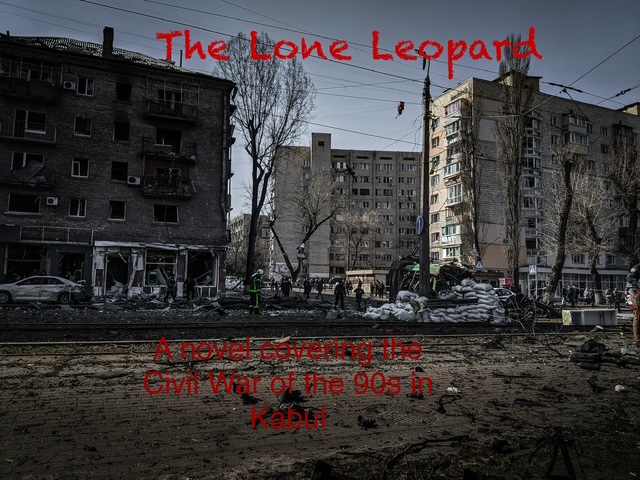
Chapter Eighteen
I excitedly told Agha and Mour how the pakoled mujahideen came across as friendly, and how the worries about the mujahideen were unfounded.
Agha, with a smouldering cigarette in his hand, hung on my words but made no comment. Mour passed me a plate of scalding ashak, pasta dumplings filled with leeks and topped with tomato sauce and yoghurt, to carry to the mujahideen checkpoint by our block – the one Baktash and I had skipped earlier on. Zarghuna took another container to Frishta’s. If only Mour asked me to deliver the second platter. Seeing Frishta, even for a short time, would’ve alleviated my thirst; except I knew Frishta would throw me and the ashak out of her apartment.
I delivered my plate to the checkpoint – at last, I’d helped my mujahideen brothers and had my share in the jihad against the Red Empire, the kafirs.
The mujahideen, who unusually wore both pakols and turbans and dug the ground, received the plate without saying a thank-you. It didn’t hurt. Kabulis’ dishes of various food were nothing compared to what they’d done for their people and watan. They earned the respect they received.
***
MOUR SPREAD ASHAK ON our plates and placed an extra pot of yoghurt in the middle of the tablecloth. Agha’s eyes fixed on the evening news, broadcasting the interim administration head Mojaddedi calling on Gulbuddin to lay down his arms and help establish national unity. I dipped an ashak in the yoghurt and placed it in my mouth. The sound of an explosion, not in the far distance. I jumped to my feet and looked out of the window, chewing on the ashak. The celebratory shooting sprees now encompassed not only their AK-47s, but also rockets and machine guns. Another massive explosion went off. Zarghuna shrieked and hugged Mour. The electricity went out – a blackout. Duvvv... another ear-splitting blast, shattering the glass windows and smashing Mour’s flowerpots. Everything quietened, except a clanging sound in my ears.
Agha’s muffled shouts to lie down.
Mour’s hands pressed on my shoulders. ‘My son’s injured.’
‘I’m OK, Mour,’ I said and coughed over my sisters’ cries and coughs. Had Mour poured warm water on my right shoulder?
‘Get to the hallway,’ Agha said and then coughed.
Warm water on my shoulder got hotter as Mour pulled me. Pieces of glass and flowerpot soil fell off me as, feeling the ground, I crawled to the hallway, all the way coughing in the dust or smoke resembling burning leather.
Banging on the door. ‘To the basement,’ Brigadier’s voice.‘Immediately.’
‘Move,’ Agha said.
Shouts of husbands telling wives to hurry up and leave their valuables behind, mothers screaming children’s names and cries of toddlers filled the corridor as everyone rushed down the stairs. My head bumped into the basement door as we sped down the stairs. Someone before us tripped over and rolled down the stairs. A jelai screamed, saying someone stepped on her foot. Mour’s head banged against the low ceiling but continued pulling my sisters and me by our hands into the pitch-dark basement with a musty smell, despite Brigadier’s shouts to duck our heads and grope our way about. You couldn’t see faces, only shadows, rushing to secure a place in the basement.
Cries of children persisted. Like me, they perhaps set foot in the basement to their block for the first time in their lives. Families kept their members close to themselves. Those who’d ended up elsewhere joined their households, using voice, touch and limited vision to reach their families.
As my eyes grew accustomed to the darkness, I spotted the rectangle-shaped basement, with steel pipes, as large as tree trunks, carrying waste and water out of the apartments along the walls. Its concrete floor must have been brushed for it to be as clean as Mour’s lounge. All 12 families from our corridor positioned themselves on the damp floor, on the two sides of the wall, half a metre tall, dividing the cellar. My world lit up when I spotted Frishta sitting in between her parents, closer to her father, while Safi lay on his mother’s lap. For a brief moment, I thanked Khudaifor whatever He’d brought on us, and for my spot, diagonally opposite from Frishta, which enabled me to have her in my view without looking at her: Agha sat next to Brigadier and alongside Agha were my sisters, Mour and me, leaning against the short wall in the middle of the cellar.
A wailing voice in the distance cried out, ‘Save my daughter.’ The voice cried out again. Everyone quietened, even the children. No one ventured out to help the poor man – not even Agha or Brigadier. Everyone stayed put, as Agha had put it earlier, ‘likeamouse’. Close shotguns of a Kalashnikov. The voice died out.
‘Tawba-tawba, Allah saves us,’ Mour said, ‘repenting’ to Khudai. Mahjan uttered an ameen. Others recited a sura from the Quran, and at the same time begged Khudai for protection.
What did I see? Agha and Brigadier, with lowered heads, made their way out despite Mour and Mahjan’s pleading. Mour let go of the cloth she pressed against my shoulder. The prospect of losing Agha, however, was more painful than the nagging shoulder pain.
The odd explosions had changed into what sounded like a war; more blasts, more artillery, more machineguns,and plenty of AK-47s. Our new home, coupled with the lack of electricity, deprived us of listening to the radio or viewing our television to know what was happening. How could they run the channel when the television crew and presenters were stuck in the war, anyway? One of them, television newsreader Nadim Barmak, together with his wife and two little daughters, settled down in the opposite corner.
Thanks, Khudai, Agha and Brigadier ducked their heads and stepped in from the cellar door. They wended their way among the families. Agha held his portable radio in his right hand, and Brigadier carried a burning oil lamp.
‘Who was it?’ Mour said.
Sweat trickled down Agha’s forehead. His eyebrows were close together and his eyes widened. Something serious must have happened. Agha asked about my shoulder. The blood stopped, I told him.
Brigadier put the lamp with the orange light in the middle and asked Frishta if she was alright. She was, once her ‘hero padar jan’ came back. Brigadier knelt and hugged her. Did he burst into tears?
‘What shall we expect from the others if you behave like this?’ Agha said. Brigadier tightened his hug, their shadow ducking on the wall. ‘You’re a military man: behave like one.’
I’d never seen a weak side to Brigadier. I came to know him as a brave man who feared nothing. He’d killed many enemies in the frontline and got injured countless times. Beat the shit out of the villainous Rashid and the bullying Mullah Rahmat not long ago. And I’d never witnessed a brave Agha. I felt proud of him, thanking Khudai for having him around us.
‘Children make you a coward,’ Brigadier said.
‘Frishta is also my daughter. I’d allow no one to stain our honour unless they pass my dead body.’
Brigadier stopped sobbing. Wiped his eyes and apologised to Agha and the other bewildered neighbours, including Frishta, whose eyes widened and ceased to blip, perhaps at learning a new side to her ‘lion’ padar jan.
Agha’s last comment worried me. Was something bad about to happen to Frishta? She positioned herself in such a way that we didn’t face each other. She wasn’t the jelai I knew. The freshness on her face had given way to dark circles around the eyes; circles which the dim light intensified even more. Her droopy mouth and bleary eyes showed that she’d deprived herself of sleep for nights. Yesterday Mahjan told Mour that over the last few days Frishta kept herself to herself and talked to no one. Mour asked me if anything had happened between us. I disclosed nothing, hoping Frishta and I would resume our private classes. Our parents, I thought, suspected we’d fallen out. It didn’t displease Mour, who’d told me to ‘keep it that way’.
All the signs indicated she hadn’t told her parents about the diary. I didn’t know why she kept everything to herself and hadn’t taken revenge, given her scornful nature. But in Pashtunwali revenge was a dish best served cold.