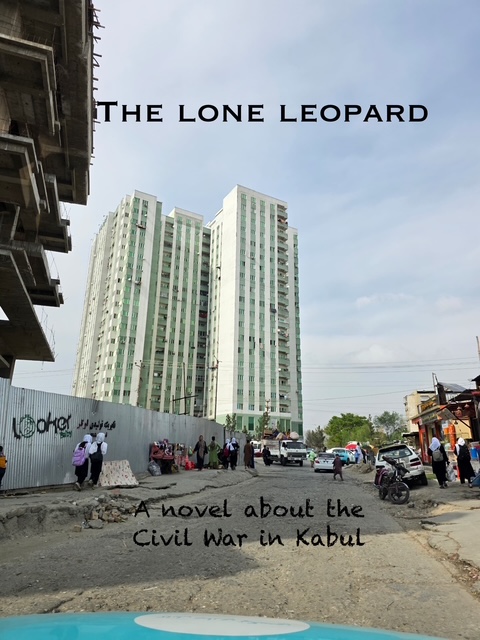
Chapter Seventeen
Agha reassured Mour not to worry because the mujahideen had promised not to harm the pro-Communists, as he took off his right sock in the hallway.
It was midday and Agha had just returned home; he’d been away overnight to officially hand over power to Sibghatullah Mojaddedi, the head of the mujahideen Shura, what Agha called ‘a parcel from Peshawar’. His red eyes showed he hadn’t slept all night. He didn’t ask how I felt, something he did every day after the school incident. Real worries occupied his mind; wetting my trousers had become an occurrence of the last century.
‘Can’t trust them. They’ve vowed to take revenge,’ Mour said, standing by the shoe cabinet.
‘What’s written in destiny won’t change,’ Agha said, and removed his left sock and passed both to Mour. ‘Get me a cup of coffee.’
A knock on the door.
‘Must be the neighbours. It is the third time they’ve come,’ Mour said to Agha.
Half a dozen neighbouring men, including Brigadier, stood as I opened the door. Agha invited them into the lounge. They wanted to discuss the dreadful repercussions of the ‘bad news’: armed men had just abducted, tortured and killed former Chief Justice Abdul Karim Shadan.
I filled cups with tea.
Agha didn’t know the details.
‘We’ve been kept in the dark. Everything is so sudden. What’s really been happening?’ a former Minister of Education from the third corridor said.
‘Long or short answer?’
‘We have time,’ he said, pointing to the steaming cups I placed by the trays of sugar-coated almonds and chocolates on the table.
‘Seven Sunni mujahideen groups from Pakistan have flooded Kabul. Another eight Shia groups have stormed the capital from Iran. Russia and India support Ahmad Shah Massoud, who cares about no one and seems to be the kingmaker. Pakistan and Saudi Arabia back Gulbuddin Hekmatyar to minimise Indian and Iranian influence. Every neighbouring country has a favourite group.
‘None of the 15 guerrilla groups have any government experience. All they know is how to fight. All are armed to the teeth and, most dangerously, loathe each other with a decades-long history of feuding and infighting. They each want to reclaim their “long-denied” rights. They have conflicting interpretations of Islam, originating from Pakistan, Iran, Saudi Arabia, Egypt and Turkey. The race for which group and their foreign benefactors will have more sway in the Arg has begun,’ Agha said.
‘They hate us, too.’
‘It’s a non-violent transfer of power, and the mujahideen have pledged not to hurt us.’
‘You buy that?’ one of the ‘comrades’ in pyjamas asked, leaning against the edge of the sofa by the flowerpots.
‘I assume Massoud will stick to his words. Not sure of Gulbuddin Hekmatyar,’ Agha said.
The second name took the air out of the room. I thought they looked for an assurance from Agha. They pledged to stand up for one another once they discovered Agha was as uncertain about the mujahideen’s reaction as they were. The neighbours left. No one had touched their tea.
‘They hid like a mouse when ill fate befell Najibullah. They’ll do it again,’ Agha said to Brigadier.
He nodded. His happy nature had vanished.
Mour came in and passed a cup of coffee to Agha.
***
I BEGGED MOUR to let me stroll to the Makroryan Market with Baktash later that afternoon. I reasoned the fear of compulsory conscription and rockets no longer existed. Mour relented.
I had three pairs of perahan tunbans, which I wore to the Friday Prayer, and put on the white ones. As it turned out later, we still didn’t have a pakol, a round hat, to be in line with what most mujahideen wore. Baktash had no pair and so slipped into his father’s baggy perahan tunban, the size of their ‘lounge curtains’. The new dress code troubled him because he didn’t look ‘handsome’.
***
MAKRORYAN HAD TAKEN on the appearance of my parents’ village in Surobi. Like the Surobi Market, piles of Pakistani wheat flour and rice sacks, as well as tins of oil, each the size of a nomad tent, had popped up before the locked-up cooperatives still filled with pockets of macaroni, and their vendors were shouting, ‘Half price, half price’.
I grew up listening to music in every social rite, on transport, in shops and hotels, but now the mujahideen seemed to have muted the culture. Music ceased to play for the first time in my life, and in the Makroryan Market’s life, and our favourite videocassette shop was shut. The Market resembled a semi-prison without Indian songs being played on loudspeakers. It no longer was the place we’d known. You rarely spotted a jelai or even a woman. Gone were the days of short skirts and scarves; all you saw was perahan tunbans, pakols and turbans supplemented by black and white Arab scarves. Very few brave haleks put on jeans and shirts. You caught no glimpse of middle-aged men. Yesterday’s Kabul had already become a dream. We seemed to have gone from one extreme to the other; the mujahideen had taken the clock decades back.
The Market, for the first time, bored me. I prayed that the Islamic government brought Wazir back: he’d be over the moon to see the change. Perhaps he’d make the strolls to the Market enjoyable again. Inshallah, by then, King Zahir Shah would have allowed music and films.
‘Let’s see them.’ I pointed to the crowd gathered around near the mosque.
‘Better to ignore them. They don’t like flat-nosed people.’
‘Come on, we’re all brothers,’ I insisted and made for the crowd.
Armed with guns, grenades, rockets and other weaponry, the mujahideen in pakols guarded their checkpoint surrounded by bags of sands on Makroryan Road. Frishta had filled me with their heroic stories, struggles and sacrifices, especially about the charismatic Commander Massoud famous as the ‘Lion of Panjshir’, whose large photo was displayed over the tank. Now we Kabulis saw them in the flesh. They did look like heroes, like the ones in Rambo III.
They spoke to us, the fascinated Kabulis, shook our hands, smiled, asked how we were, and even let some haleks talk on their walkie-talkies and climb on their tanks. Some Kabulis handed them flowers. Others tossed chocolates and sugar-coated almonds to them.
We left the ‘pakoled Mujahideen’ and set off for Old Makroryan to see the ‘turbaned Mujahideen’ there. I noticed most Russian jeeps and Volgas had vanished from the front of the blocks. So did the women and men sightseeing from balconies. Only haleks strolled, wearing either too baggy or too tight perahan tunbans. You hardly saw someone whose perahan turbans fit them. It really felt like the Surobi Market, except the haleks here had fresh faces. So did our school bushes and trees at the front and the back of the buildings, whose classrooms were now occupied by the armed Mujahideen.
This side’s mujahideen equally surrounded themselves with bags of sands and pebbles. Like the turbaned photos of their leader on the walls of the roundabout, they wore turbans and glared at us like we came from a different planet. The rough faces and dusty hair – the part visible outside of their turbans – convinced you that they’d just risen from the grave. We didn’t dare to speak with them.
‘They’re Gulbuddin Hekmatyar’s fighters. Thankfully, we aren’t under their government,’ Baktash said.
‘Jawad is.’
‘Hopefully, they won’t let him come to the school in our country.’
‘Shirullah also won’t be able to–’
‘Look how wild they are,’ Baktash said, pointing to a Russian tank full of armed mujahideen in turbans. The tank drove out of Old Makroryan, spun around with a screeching sound, creating dust and chanting Allahu Akbar, ‘Khudai is great’, firing guns into the air in celebration, forcing Baktash and me, like many others, to hold our breaths and block our ears.
‘No more hoorah. Get used to Allahu Akbar,’ Baktash said as we headed back to our country, New Makroryan.
‘I hated hoorah. The school forced me to,’ I said.
Another caravan of pick-up trucks full of armed mujahideen in pakols turned onto Makroryan Road, equally chanting ‘Allahu Akbar’, firing deth-deth-deth into the air.
Pedestrians echoed their chants.
Baktash and I jumped as cold water splashed over us. A woman with a plastic pot in her hand looked from the balcony in the direction of Makroryan Road, which the seven pick-up trucks disappeared into, and screamed ‘Thank you, Khudai’ for ending Afghanistan’s misery.
We headed back to the Market, to the pakoled Mujahideen’s country.
‘The mujahideen will turn Kabul into a river of blood,’ Baktash said, his left shoulder soaked in water.
‘President Najibullah said this. He lies.’
‘Papa also thinks so. Afghans’ joy will soon turn into misery.’
‘No bullet will be heard in Kabul from now on. The mujahideen will bring back King Zahir Shah.’ I wondered how much Frishta’s thinking had influenced me.
‘We drove out Shorawi, and instead invited Panjabis and Iranians to occupy us. What is the point of the jihad?’ Baktash said, pointing to the stock of food.
‘The mujahideen are liberators. Khudai has given them success because they have the prayers of all Afghans.’
‘Papa says they’re proxies of the regional powers. They fight for their interests, not Islam.’
‘Your father is pessimistic because he’s lost power.’
‘So has yours.’
‘Agha never worked for the KHAD.’
Baktash’s father led a branch of the KHAD renowned for the torture and unlawful killings of thousands of mujahideen over the past 14 years. Apart from the previous government’s high-profile ex-members, the remaining Kabulis treasured the mujahideen’s victory. Why shouldn’t they? Islam succeeded. Eternal peace and security replaced war and instability. The inflation rate reduced considerably. The King’s arrival would make things even better.
‘In the past 24 hours, we’ve lost all the gains of the past decade and a half,’ Baktash said.
‘Like what?’
‘Like education. These bearded people may shut jelais’ schools.’
My thoughts raced to Frishta and whether we’d go back to school. School without Frishta would become as dull as a grave. I missed her like I hadn’t seen her for years. The feeling of having lost a precious thing was a nagging worry at the back of my mind, but the mujahideen victory had become a form of escapism.
‘I can’t become an actor either.’
‘Why not?’
‘They view acting as un-Islamic.’
Will the mujahideen prevent Frishta from going to school? The horrifying question crossed my mind.
‘Don’t tell anyone, Ahmad. We’re going to Moscow.’
‘Really?’ We arrived back at the place the Khalqi agent had tried to conscript Wazir, where now the seller with a dusty face shouted, ‘Half price, half price,’ and a crowd of shoppers loaded the 49kg wheat flour bags onto two-wheeled sack trucks or their backs.
‘Life’s going to become Hell in Kabul.’
‘You leaving me?’
‘Tell your father to come with us. His life’s also in danger.’
I was filled with trepidation when he mentioned Agha. I didn’t want to lose him. My sisters and I would beg the mujahideen not to harm my father.
‘We’ll go to the same college in Moscow and stay friends. We’ll get Russian jelais.’
‘It’s haram,’ I said. And I’d never leave Frishta, no matter what.
Baktash said they’d be selling their household goods and the apartment soon. He wanted me to stay out longer, but my thoughts raced home – in case Frishta and her parents drank tea at ours.
I’d have stayed longer had I known what was around the corner. Most Kabulis didn’t realise it was the first day of a different life.