By Dr Sharifullah Dorani*
‘It’s fair to say, then, that by the third or fourth go-around of Power-Points slides, battlefield maps, and balky video feeds, along with the ever-present fluorescent lighting, bad coffee, and stale air, everyone was sick of Afghanistan, sick of meetings, and sick of one another.’[1] President Obama on the decision-making for the decision to surge
Introduction
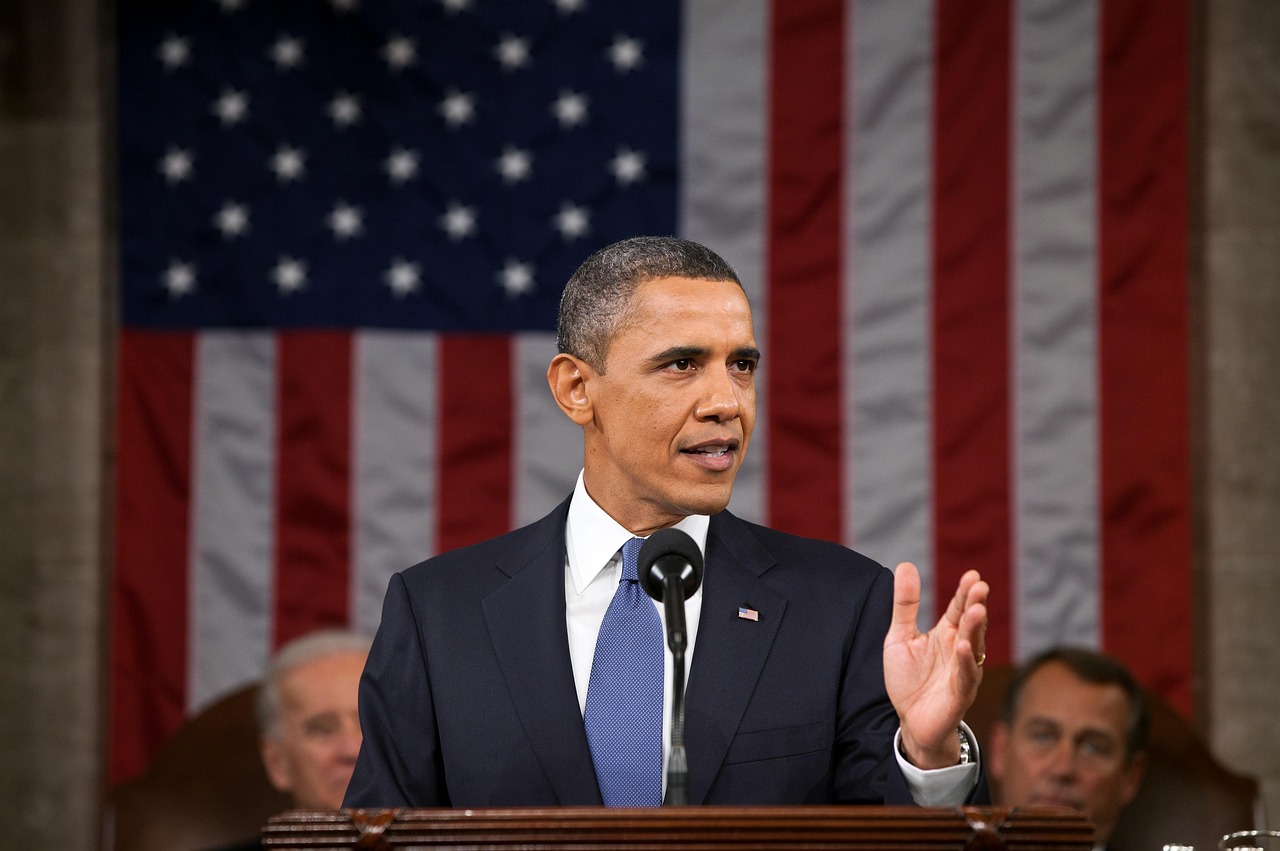
On December 1, 2009, President Barack Obama announced the decision to deploy an additional 30,000 troops (+3,000 enablers) to Afghanistan as part of the Global War on Terror (GWOT), or what Obama later termed ‘Countering Violent Extremism’. The decision was made following an extensive three-month review known as ‘Af-Pak’. The review consisted of approximately nine/ten sessions, discussing almost all aspects of the Af-Pak strategy from top to bottom, sometimes even going into the very basics, e.g. why was the US in Afghanistan?
This article explores the intricacies of this decision-making process, revealing how Obama, dissatisfied with the military’s initial plans, took a direct role in shaping the final strategy. It details the president’s demands for a clear timeline and an exit strategy, and how these demands transformed the mission from an open-ended engagement to a more focused effort with defined goals. This analysis uncovers the key factors that influenced Obama’s decision and explains the specific objectives of the final strategy.
Obama and the surge decision
Halfway through the review, perhaps realising that Biden and his group seemed not to be succeeding in their efforts to change the military’s mind on its requests, and perhaps failing to develop a clear view on the Afghanistan engagement, Obama stepped in by demanding changes from the military. He asked (more emphatically) for additional options or plans other than the one put forward by McChrystal.
He told the military that McChrystal’s plan was open-ended and silent on when to transfer to Afghans. There was ‘neither victory nor defeat in 10 years’.[2] He wanted the plan to have an evaluation point (show progress or the lack of it) and a date they could begin to ‘transfer’ to the Afghan National Security Forces in order to allow US forces to withdraw: an exit strategy.[3] Transfer was the part which would relieve US soldiers to come back home. The Biden group and its supporters, including John Kerry,[4] were evidently trying to add the ‘transfer’ factor to the counterinsurgency strategy.
While Obama did not haggle with the military leadership over the absence of the counterinsurgency strategy conditions in Afghanistan and over the ‘three-Pakistan-related-problems’, as he did not wish to come across as another President Lyndon Johnson to micromanage the war in Helmand from the Situation Room (in the White House), the President made it clear that the US and allies could not continue (and sustain) to pay in lives and treasures forever. ‘We don’t want our enemy to wait us out, but we also need to show some light at the end of the tunnel’, said Obama.[5] All the plans the military had about Afghanistan, he implied, should be achieved on a deadline, and sooner rather than later. A timeline, remarked American journalist Bob Woodward, was a red flag because the military believed that war did not start or end on anyone’s schedule as war was not a ‘science’,[6] but Obama’s explanation was that they could not ‘sustain support at home and with allies without having some explanation that involves timelines’.[7] The US could not tend to President Hamid Karzai forever, so if transfer required dealing with local/tribal leaders who would take care of security, Obama was content. He wanted to involve the tribal leaders to take control of the security because he did not want US forces to play the role of sheriff in every single town and village.[8]
But this logic was inconsistent with US Commander in Afghanistan General Stanley McChrystal’s planned counterinsurgency strategy. These local leaders, most of them previously warlords, could hardly win the hearts and minds of the people, and again this would fail the essence of the counterinsurgency strategy, which was winning over the population. Obama nevertheless was emphatic on ‘transfer’ and ‘deadline’.
Transfer and deadline were something new that were coming into the 2009 Af-Pak review. From the start of US intervention up to Obama’s announcement of the Af-Pak strategy on March 27, 2009, the idea of when to withdraw US forces was hardly considered. Obama and most of his War Cabinet focused on what had gone wrong in the war of ‘necessity’ and how to get them right. But now the tone was different: how to transfer to the Afghans, and to do so at a particular date, and sooner rather than later, as the President would not sign on for a plan ─ like the ‘Alternative Mission in Afghanistan’ proposed as alternative by the Petraeus camp ─ that still kept 68,000 US troops by 2017, leaving his predecessor far more troops than Obama had inherited.
It was not in their national interest to commit to a decade-long war as the military wanted.[9] So Obama demanded the military reduce the duration. One way to do so, Obama suggested, was to enter the surge troops faster.
There was another reason, too, that Obama wanted to shorten the duration. A long-term stay in Afghanistan without an end date would provide the Taliban with more pretexts that the US was planning to permanently occupy the country.[10]
Another way to reduce the duration of US involvement was to change the goal. Obama believed that defeating the Taliban was beyond US interests and means, a goal unachievable due to the Taliban being indigenous fighters.[11] Obama came up with a goal: to disrupt the Taliban, and by disrupt, he did not mean scatter but degrade the Taliban’s capacity to such an extent that security could be manageable by the Afghan National Security Forces. Moreover, Obama only wanted to focus the counterinsurgency strategy on those population centres and lines of communications threatened the most ─ to secure only those that were necessary to disrupt the Taliban until the Afghan National Security Forces were developed.[12]
To reduce costs and duration, Obama made two more suggestions. He wanted the mission to be more internationalised, as this way some troops could be provided by NATO. Having made the strategy purely Americanised was another flaw (in addition to its open-endedness) in McChrystal’s assessment. But McChrystal and Petraeus argued that NATO forces did not have the same capabilities as the US forces, they operated under their own rules, so this gave McChrystal less control over them, and there was no unity of command. While Obama half-heartedly bought this argument, as he knew that NATO forces could still be used as trainers, he told the military that they should reduce the number of the Afghan National Security Forces McChrystal had planned to train because the necessity of 400,000 troops was not made clear to him. Instead, McChrystal should set goals on a year-by-year basis. For Obama, the objective of 400,000 Afghan National Security Forces was based on the counterinsurgency strategy maths, and that was literally the extent of the analysis, ‘and there seemed to be a degree of automatic piloting to it’.[13]
Obama in effect was applying the Colin Powell Doctrines: clarity of US goals, the duration to achieve them (which would buy him the consent of Americans), and a timeline for an exit strategy (see my article on Colin Powell). Obama’s demands were consistent with Kerry’s advice, and if these questions remained unanswered, Kerry had warned, the consequence would be an immature withdrawal where the mission remained unachieved.[14]
Obama expected a plan made by the military to include all the alterations he put forward, but, to his frustration, it was never developed. So a disappointed and dissatisfied Obama became more and more involved in the planning of the military decision towards the end than one would expect of a president.[15]
Obama himself wrote the ‘clearly defined’ strategy ─ the President Obama’s Orders for Afghanistan, Pakistan Strategy of November 29, 2009 ─ and, with the cooperation of Secretary of Defense Robert Gates (as seen in my article entitled), the President was able to apply limits on the strategy’s duration, geography, and goals when he announced his decision in a speech delivered on December 1, 2009.
The first clarity Obama brought to the mission was to limit its duration: the 30,000 (+3,000 enablers) surge troops would begin to withdraw in July 2011 and the majority of US forces by the end of 2014.
The second clarity was to drop commitments, i.e. creating a ‘democratic government’ or employing a nation-building strategy, which were irrelevant to US national security interests and which the US could not afford to achieve.
The third clarity was the goal: it remained the same to the one he had announced on March 27, 2009: to disrupt, dismantle, and defeat Al-Qaeda in Afghanistan and Pakistan, and to prevent its capacity to threaten America and its allies in the future.[16] It was no longer defeating the Taliban to achieve the aforementioned goal. Rather, to meet the goal of disrupting, dismantling and defeating Al-Qaeda, Obama instructed his administration to pursue three objectives within Afghanistan: deny Al-Qaeda a safe haven; reverse the Taliban’s momentum and deny or ‘disrupt’ its ability to overthrow the government; and strengthen the capacity of the Afghan National Security Forces and Afghan Government to enable them to take lead responsibility for Afghanistan’s future, which would then relieve US soldiers.
These objectives were those proposed by Gates during the Af-Pak review,[17] which later Obama included in the strategy. These objectives would be met in three ways: military surge, civilian surge, and working closely with Pakistan, or what was called a ‘diplomatic surge’.[18]
The military surge would reverse the Taliban’s momentum and increase the Afghan National Security Forces so that US forces could transfer responsibility to the Afghans.[19]
The civilian surge would provide technical, human, financial, and developmental[20] assistance to improve Afghan institutions, especially those who were led by less corrupt ministers, so that they could provide better governance. The emphasis was not on strengthening a centralised government but working with and enhancing subnational governance and existing local structures, e.g. creating provincial and district shuras or councils, even if it meant working around President Hamid Karzai or his central government.[21]
The diplomatic surge was to pursue talks with the Taliban to facilitate the reintegration of those Taliban who were coerced to fight, encourage economic integration and cooperation between the regional countries, and deal with the interrelated regional problems, especially between Afghanistan and Pakistan. NATO states, Russia, China, India, other Muslim countries, and especially Pakistan, would be approached for their assistance.[22]
All the above diplomatic objectives were achievable if Pakistan acted genuinely. In fact, the entire diplomatic surge was aimed at persuading Pakistan to provide genuine support for US Afghan strategy.[23] To obtain its genuine support, the US was to enhance its support to Pakistan to ensure the Pakistani people and Pakistan met their potential. The State Department was also to launch a new public diplomacy, e.g. people-to-people contacts, to challenge the extremist narratives in Pakistan about the US and ensure ordinary Pakistanis saw the US as a friend, not an enemy. It was a ‘counter-propaganda plan’, since the George W Bush Administration had embraced Pakistani President Pervez Musharraf but ignored the 185 million Pakistanis.[24]
Conclusion
The ‘Af-Pak’ review reveals that President Obama’s surge decision was a forceful act of presidential leadership. This article has demonstrated that when military options failed to meet his requirements for a clear exit strategy and defined goals, Obama became deeply and personally involved in shaping the war’s direction. He rejected the notion that the US could sustain an open-ended commitment, instead opting for a strategy that would begin transferring responsibility to Afghan forces by a fixed date. The final plan—which introduced clarity on mission goals, a commitment to a timeline, and a focus on disrupting Al-Qaeda rather than defeating the Taliban—was, in many ways, Obama’s own creation, born out of his frustration and desire to bring the Afghan engagement to a responsible conclusion.
References
Baker, Peter, ‘How Obama Came to Plan for ‘Surge’ in Afghanistan’, The New York Times, December 5, 2009.
Chandrasekaran, Rajiv. 2012. Little America: the war for Afghanistan. New York: Alfred A. Knopf.
Clinton, Hillary, ‘Clinton’s Plan for Afghanistan’, Council on Foreign Relations, March 6, 2008.
Clinton, Hillary R., Afghanistan: Assessing the Road Ahead, ‘Secretary Of State Hillary Rodham Clinton Testimony Before The Senate Foreign Relations Committee Washington, DC’, Hearing Before Senate Committee on Foreign Relations, December 3, 2009, <http://www.foreign.senate.gov/imo/media/doc/ClintonTestimony091203a1.pdf>.
Eikenberry, Karl, ‘Statement Of Ambassador Karl Eikenberry Before The Senate Foreign Relations Committee’, Hearing Before Senate Committee on Foreign Relations, December 9, 2009, <http://www.foreign.senate.gov/imo/media/doc/EikenberryTestimony091209a1.pdf>.
Gates, Robert, Afghanistan: Assessing the Road Ahead, ‘Statement of Secretary of Defense Robert Gates Senate Foreign Relations Committee’, Hearing Before Senate Committee on Foreign Relations, December 3, 2009, <http://www.foreign.senate.gov/imo/media/doc/GatesTestimony091203a1.pdf>.
The President Obama’s Orders for Afghanistan, Pakistan Strategy of November 29, 2009.
Gates, Robert Michael. 2014. Duty: memoirs of a Secretary at war.
Kerry, John, ‘Testing Afghanistan Assumptions; The Lesson of Vietnam is Don’t Commit without a Clear Strategy’, The Wall Street Journal, September 27, 2009.
Kerry, ‘Excerpts From Senator John Kerry’s Speech on Afghanistan’, Senate Committee on Foreign Relations, October 26, 2009, <http://www.foreign.senate.gov/press/chair/release/excerpts-from-senator-john-kerrys-speech-on-afghanistan>.
Kerry, ‘Chairman Kerry Opening Statement At Hearing With Secretary Clinton, Secretary Gates and Admiral Mullen’, Senate Committee on Foreign Relations, December 3, 2009, <http://www.foreign.senate.gov/imo/media/doc/KerryStatement091203a1.pdf>.
Lew, Jacob J., ‘Deputy Secretary Of State Jacob J. Lew Testimony Before The Senate Foreign Relations Committee’, Hearing Before Senate Committee on Foreign Relations, December 9, 2009, <http://www.foreign.senate.gov/imo/media/doc/LewTestimony091209a1.pdf>.
Mullen, Michael G., Afghanistan: Assessing the Road Ahead, ‘Statement of Admiral Michael G. Mullen, US Chairman of the Joint Chiefs of Staff Before the 111th Congress Senate Foreign Relations Committee’, Hearing Before Senate Committee on Foreign Relations, December 3, 2009, <http://www.foreign.senate.gov/imo/media/doc/MullenTestimony091203a1.pdf>.
Obama, Barack. (2009). REMARKS BY THE PRESIDENT ON A NEW STRATEGY FOR AFGHANISTAN AND PAKISTAN. [The White House].
Obama, Barack. Remarks by the President in Address to the Nation on the Way Forward in Afghanistan and Pakistan. [The White House], 1 December 2009, <https://obamawhitehouse.archives.gov/blog/2009/12/01/new-way-forward-presidents-address>.
Obama, Barack. 2020. A Promised Land. Viking.
Petraeus, David H., ‘Statement of General David H. Petraeus to the Senate Foreign Relations Committee’, Hearing Before Senate Committees on Foreign Relations, December 9, 2009, <http://www.foreign.senate.gov/imo/media/doc/PetraeusTestimony091209a1.pdf>.
The President Obama’s Orders for Afghanistan, Pakistan Strategy of November 29, 2009.
Woodward, Bob. 2010. Obama’s wars. New York; Simon & Schuster, pp. 251-253.
[1] Obama, Barack. 2020. A Promised Land. Viking, p. 438.
[2] Woodward, Bob. 2010. Obama’s wars. New York; Simon & Schuster, pp. 251-253.
[3] Baker, Peter, ‘How Obama Came to Plan for ‘Surge’ in Afghanistan’, The New York Times, December 5, 2009; Woodward, Bob. 2010. Obama’s wars. New York; Simon & Schuster, pp. 251-253.
[4]Kerry, John, ‘Testing Afghanistan Assumptions; The Lesson of Vietnam is Don’t Commit without a Clear Strategy’, The Wall Street Journal, September 27, 2009.
[5] Woodward, Bob. 2010. Obama’s wars. New York; Simon & Schuster, pp. 229-230.
[6] Gates, Robert Michael. 2014. Duty: memoirs of a Secretary at war, pp. 363, 379.
[7] Woodward, Bob. 2010. Obama’s wars. New York; Simon & Schuster, p. 230.
[8] Woodward, Bob. 2010. Obama’s wars. New York; Simon & Schuster, p. 240.
[9] Woodward, Bob. 2010. Obama’s wars. New York; Simon & Schuster, pp. 276-279.
[10] Woodward, Bob. 2010. Obama’s wars. New York; Simon & Schuster, pp. 276-280; Gates, Robert Michael. 2014. Duty: memoirs of a Secretary at war, p. 379.
[11] Woodward, Bob. 2010. Obama’s wars. New York; Simon & Schuster, p. 169; Obama, Barack. Remarks by the President in Address to the Nation on the Way Forward in Afghanistan and Pakistan. [The White House], 1 December 2009, https://obamawhitehouse.archives.gov/blog/2009/12/01/new-way-forward-presidents-address
[12]Woodward, Bob. 2010. Obama’s wars. New York; Simon & Schuster, pp. 228, 270-271.
[13]Woodward, Bob. 2010. Obama’s wars. New York; Simon & Schuster, pp. 251-252, 264, 276; Chandrasekaran, Rajiv. 2012. Little America: the war for Afghanistan. New York: Alfred A. Knopf, p. 128.
[14] Kerry, ‘Chairman Kerry Opening Statement At Hearing With Secretary Clinton, Secretary Gates and Admiral Mullen’, Senate Committee on Foreign Relations, December 3, 2009, <http://www.foreign.senate.gov/imo/media/doc/KerryStatement091203a1.pdf> ; Kerry, ‘Excerpts From Senator John Kerry’s Speech on Afghanistan’, Senate Committee on Foreign Relations, October 26, 2009, <http://www.foreign.senate.gov/press/chair/release/excerpts-from-senator-john-kerrys-speech-on-afghanistan>; Kerry, ‘Chairman Kerry Opening Statement At Hearing With Secretary Clinton, Secretary Gates and Admiral Mullen’, Senate Committee on Foreign Relations, December 3, 2009, <http://www.foreign.senate.gov/imo/media/doc/KerryStatement091203a1.pdf>.
[15] Woodward, Bob. 2010. Obama’s wars. New York; Simon & Schuster, pp. 279-280.
[16] Obama, Barack. (2009). REMARKS BY THE PRESIDENT ON A NEW STRATEGY FOR AFGHANISTAN AND PAKISTAN. [The White House]. ; Obama, Barack. Remarks by the President in Address to the Nat<ion on the Way Forward in Afghanistan and Pakistan. [The White House], 1 December 2009, <https://obamawhitehouse.archives.gov/blog/2009/12/01/new-way-forward-presidents-address>.
[17] Gates, Robert Michael. 2014. Duty: memoirs of a Secretary at war.
[18] Obama, Barack. Remarks by the President in Address to the Nation on the Way Forward in Afghanistan and Pakistan. [The White House], 1 December 2009, https://obamawhitehouse.archives.gov/blog/2009/12/01/new-way-forward-presidents-address ; The President Obama’s Orders for Afghanistan, Pakistan Strategy of November 29, 2009.
[19]Mullen, Michael G., Afghanistan: Assessing the Road Ahead, ‘Statement of Admiral Michael G. Mullen, US Chairman of the Joint Chiefs of Staff Before the 111th Congress Senate Foreign Relations Committee’, Hearing Before Senate Committee on Foreign Relations, December 3, 2009, <http://www.foreign.senate.gov/imo/media/doc/MullenTestimony091203a1.pdf>.
[20] Developmental assistance was provided to private sectors, most notably the agriculture sector. It also encompassed multifaceted anti-drugs strategy,Clinton, Hillary R., Afghanistan: Assessing the Road Ahead, ‘Secretary Of State Hillary Rodham Clinton Testimony Before The Senate Foreign Relations Committee Washington, DC’, Hearing Before Senate Committee on Foreign Relations, December 3, 2009, <http://www.foreign.senate.gov/imo/media/doc/ClintonTestimony091203a1.pdf>; Eikenberry, Karl, ‘Statement Of Ambassador Karl Eikenberry Before The Senate Foreign Relations Committee’, Hearing Before Senate Committee on Foreign Relations, December 9, 2009, <http://www.foreign.senate.gov/imo/media/doc/EikenberryTestimony091209a1.pdf>.
[21] Clinton, Hillary R., Afghanistan: Assessing the Road Ahead, ‘Secretary Of State Hillary Rodham Clinton Testimony Before The Senate Foreign Relations Committee Washington, DC’, Hearing Before Senate Committee on Foreign Relations, December 3, 2009, <http://www.foreign.senate.gov/imo/media/doc/ClintonTestimony091203a1.pdf> ;Gates, Robert, Afghanistan: Assessing the Road Ahead, ‘Statement of Secretary of Defense Robert Gates Senate Foreign Relations Committee’, Hearing Before Senate Committee on Foreign Relations, December 3, 2009, <http://www.foreign.senate.gov/imo/media/doc/GatesTestimony091203a1.pdf>; The President Obama’s Orders for Afghanistan, Pakistan Strategy of November 29, 2009;Obama, Barack. Remarks by the President in Address to the Nation on the Way Forward in Afghanistan and Pakistan. [The White House], 1 December 2009, <https://obamawhitehouse.archives.gov/blog/2009/12/01/new-way-forward-presidents-address>; Eikenberry, Karl, ‘Statement Of Ambassador Karl Eikenberry Before The Senate Foreign Relations Committee’, Hearing Before Senate Committee on Foreign Relations, December 9, 2009, <http://www.foreign.senate.gov/imo/media/doc/EikenberryTestimony091209a1.pdf>; Lew, Jacob J., ‘Deputy Secretary Of State Jacob J. Lew Testimony Before The Senate Foreign Relations Committee’, Hearing Before Senate Committee on Foreign Relations, December 9, 2009, <http://www.foreign.senate.gov/imo/media/doc/LewTestimony091209a1.pdf>.
[22] Petraeus, David H., ‘Statement of General David H. Petraeus to the Senate Foreign Relations Committee’, Hearing Before Senate Committees on Foreign Relations, December 9, 2009, <http://www.foreign.senate.gov/imo/media/doc/PetraeusTestimony091209a1.pdf>; Clinton, Hillary R., Afghanistan: Assessing the Road Ahead, ‘Secretary Of State Hillary Rodham Clinton Testimony Before The Senate Foreign Relations Committee Washington, DC’, Hearing Before Senate Committee on Foreign Relations, December 3, 2009, <http://www.foreign.senate.gov/imo/media/doc/ClintonTestimony091203a1.pdf>; Eikenberry, Karl, ‘Statement Of Ambassador Karl Eikenberry Before The Senate Foreign Relations Committee’, Hearing Before Senate Committee on Foreign Relations, December 9, 2009, <http://www.foreign.senate.gov/imo/media/doc/EikenberryTestimony091209a1.pdf>.
[23] Obama, Barack. Remarks by the President in Address to the Nation on the Way Forward in Afghanistan and Pakistan. [The White House], 1 December 2009, https://obamawhitehouse.archives.gov/blog/2009/12/01/new-way-forward-presidents-address
[24]Lew, Jacob J., ‘Deputy Secretary Of State Jacob J. Lew Testimony Before The Senate Foreign Relations Committee’, Hearing Before Senate Committee on Foreign Relations, December 9, 2009, <http://www.foreign.senate.gov/imo/media/doc/LewTestimony091209a1.pdf>; Clinton, Hillary, ‘Clinton’s Plan for Afghanistan’, Council on Foreign Relations, March 6, 2008; Woodward, Bob. 2010. Obama’s wars. New York; Simon & Schuster, p. 209.
*Sharifullah has a PhD from Durham University in the UK on America’s Afghanistan War. He has authored several articles and two acclaimed books: The Lone Leopard, a novel set in Afghanistan, and America in Afghanistan, published by Bloomsbury Publishing. Sharifullah is the founder of CEPSAF and the South Asia and Middle Eastern Editor at CESRAN International.