Chapter Twenty-One
Baktash and his father’s killings shocked everyone. Shukria, who worried more about Afghanistan losing its identity than her losing her life, supposed ‘high-profile Communists’ who stayed put at their addresses, or rather in the basements of their flat, would meet the same fates as Baktash’s father and Mr Barmak, because the mujahideen longed for revenge. She endured the basement, what she called ‘the homeless shelter’, because her elderly parents couldn’t walk long distances, but wasn’t sure why those who could ‘fly’ still stuck around. Her words captivated Agha and Brigadier. Both kept nodding.
Frishta covered herself in a blanket, her head resting on Brigadier’s right arm. The face revealed no expression, and the eyes shed no tears over Roya and Baktash’s deaths. Perhaps she didn’t believe she’d never see them both again. Or maybe those she’d trusted the most let her down. I knew, though, that she worried for Baz Muhammad’s wife, as I overheard Brigadier on several occasions over the past week reasoning with her how dangerous it was to go to Bimaro.
***
LATER IN THE SAME AFTERNOON, Agha spoke the few agonising words that were about to separate me from Frishta: we were to leave tomorrow morning for the peaceful Mazar-e-Sharif where Dostum reigned with an iron fist and defended ex-pro-Communists, including Agha’s friends. The offer extended to Brigadier, but everyone knew it was impossible for a wife who was nearly eight months pregnant to duck, dodge or walk – not to mention run for miles. Brigadier was ‘tired of running’; he was ‘born’ in Kabul and would ‘die’ in Kabul.
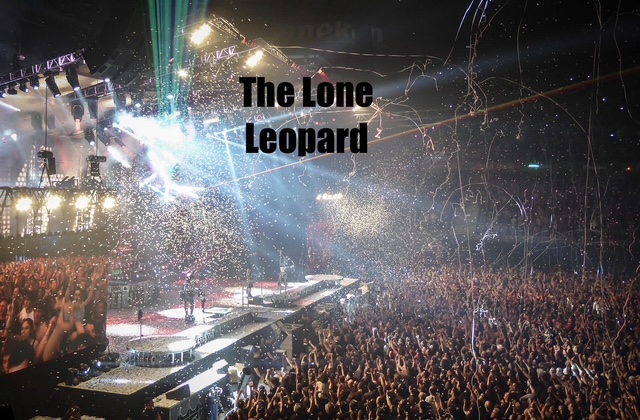
Wazir’s disappearance, the humiliation in school, the stealing of the diary, Roya’s death, the shooting of Baktash and his father all appeared to have taken place decades back when destiny was about to separate me from Frishta. I gulped for breath as the stone that was stuck to my chest from day one in this stinking cage pressed. I asked for toilet permission from Agha and, before Mour realised, sneaked out. Turned the key in the door and tiptoed among the shattered glass to the kitchen to turn the generator on. Entered the lounge. Rain showered through the glassless windows over the scattered potting soil and pieces of broken glass, having turned Mour’s Jalalabad into a muddy Bimaro. Switched on the satellite TV, a rare gift from Agha after the school’s incident, and flicked through a few channels. Men and women in long hair and black undershirts played guitars and drums like crazy. Thousands of teenagers clapped, danced and sang together with them. It wasn’t real. Could there be such a world where there was no bombing, no fighting, no hiding in a basement? Where you didn’t collect your best friend’s brain with your own hands? Where you were forced to separate from your mina? The teenagers on the screen lived on another planet. I switched the television and the generator off and got into my room.
Glass window pieces and rainwater rolled down as I lifted the corner of my mattress and pulled out the red diary. Leaned against my bed, pushed the books with my feet to stretch out and flicked the pages, but wasn’t able to read the damn Russian language. If only Raziq Khan were around to translate Frishta’s writing. Everyone seemed to have abandoned Kabul; even its sunny days had turned into depressingly grey ones like today. I kissed her handwriting. Held it closer to my heart. The harder I pressed the vinyl cover, the lighter the stone’s weight became. Opened the diary again and read the dates below Frishta’s notes. The first entry dated back to nearly nine weeks ago, the first day of year nine, the day I first met Frishta. She offered me her friendship. What did I give her in return? I kissed her handwriting. Once. Twice. Thrice. Kept kissing it. No one saw me. No one heard me above the sound of the artillery and explosions, a sound which, like the Surobi mill, hardly stopped. Khudai, please give me another chance. Shockingly, it was becoming less likely.
Time to make it up to friends, a voice whispered Brigadier’s words from this morning. Stop being a coward, the voice went on. Place your trust in Khudai and go for it.
I put the red diary under the mattress, tiptoed to the bathroom, performed ablutions, then to the kitchen, filled a bottle with water, got two dried naans, removed the mould from them, placed both in a carrier bag, locked the apartment door, rushed down the stairs, opened the main block door and off into the ghost town where you’d think a plague had claimed the lives of everyone. The muffled sounds of deth-deth-deth, devv… devv, tak-tak-tak filled Kabul. Khudai, I’m in Your hands, please keep me safe, I prayed and carried on with my journey, dodging and ducking through the block gardens whose chopped shrubs covered the ground like glitter on the hall floor of the InterContinental Hotel at Baktash’s birthday party. The sound of the chew-chew of bullets above my head persisted, some hitting and deflecting off the walls of the block.
A bomb had created a hole in the playing ground, the size of the Russian truck Brigadier had filled with guards to get Rashid, and in the middle of it lay a leg half-buried in the water. Next to it, a dirt-smeared pink baby doll leaned against a wet dirt clod. I hastened, my head ducking by the side of the nursery wall. Even the stray dogs had disappeared. They might’ve gone into the basement or emigrated to safer provinces. I covered my nose from the smell of rotting flesh. My foot stepped on soft ground as I turned around Block 8. Scores of flies flew with a buzzing sound. I cupped my nose and screamed, jumping over the decomposed dog body with its tummy exposed to the air. Breathed in and out, my legs trembling. A hole as huge as a garage had appeared in the side of a bedroom; its carpet and furniture had disappeared. Khudai, I seek refuge in You; may You save me from bullets and shrapnel. I carried on with the journey, trying to pay no attention to my legs trembling. The ground-floor flat of Block 11 had become blackened, and its windows shattered. Below the windows, four fresh graves, two of which were tiny, had been dug by the backyard lawn.
The front of the block allowed me to view the spectral Bimaro. The barren ground on the other side of Airport Road, where I’d snatched Frishta’s diary, was full of with sporadic, ‘half-price’ wheat flour sacks covered with white cloths. Khudai, give me the courage to help Frishta. Help me suppress my fears like Frishta. I darted across the road and raced through the wheat sacks and the thorny shrubs, but my foot tripped on a flour sack and I fell over. Froze as I removed the white cloth from my foot, feeling a tingle of goose bumps over my body. The fabric now pulled at the hips of a bald man with a long moustache holding a cigarette in his mouth and with a piece of paper was stuck to his chest with writing in blood: ‘Food, Clothing and Shelter for the Poor’.
I raced on with my journey as a heavy shower broke out. Khudai must’ve been angry this year on the warring mujahideen for the rain to come down so forcefully that I feared it might wash away the Bimaro huts. I climbed up the hill and footslogged along the stench-smelling passageway of the ghostly neighbourhood.
I hurled the plastic bag over the wall, put my right foot on the metal knob, pulled on the upper edge of the wooden door, but my trembling foot slipped on the knob. Succeeded at the second attempt and jumped into the yard. Tore the plastic and climbed over the window. Blocked my nose and stuck out my neck for air. Inhaled. Exhaled. Repeated it again and again. Flies buzzed as I got closer to the corner. Her face had turned yellow, her eyes closed and the mouth was open to the right as if someone had punched her on the left side of her chin. I was too late to nurse her.
Frishta worried for this woman; laying her to rest reduced Frishta’s concerns. Khudai may have given me the opportunity to make it up to Frishta – and to Khudai. Accusations without proof were a sin.
The grave horribly mangles the body, crushes its bones and robs the soul for the call on Qiyamat Day if it is buried without proper Muslim rites, we conversed as children. I distrusted the accuracy of kid conversations and tried to remember the teachings from our mullahs and religious books. I knew Islam demanded ritual purity in death, as in life. Understood female relatives washed a woman’s body in the female quarters, but had to give this a miss. Was sure graves should be about six feet deep and have an L shape called lahad. Unsure whether the feet pointed towards Mecca, so on Qiyamat Day the body sat up facing the Holy City, or the feet pointed towards the south, the head to the north and the face to Mecca to allow the dead person to sit up at the Last Judgment. Went for the position where she faced the Holy City on Qiyamat Day.
He was the most Gracious and Merciful, and I begged for His forgiveness, if I got the Islamic procedures wrong. I prayed for His help and began digging. Afghans believed that when you had no one, you had Khudai. I witnessed this in the case of the poor woman. The rain had turned the soil as soft as Mour’s dough, but it miraculously stopped during the excruciating hours of digging. One shovel clobber dislocated the padlock and the chain. Khudai gave me the physical strength to pull her heavy body to the grave, throw dirt, or rather wet soil, on her.
I luckily found a small stone in the shed and installed it parallel; inshallah, I got that right as men’s feet and headstones sat perpendicular to the body line. Her body remained above the ground. But Khudai knew that was the best I did in the situation. I read a few surasI knew from the Quran. That day I also prayed to Khudai not to make me die on a rainy day and get buried in the cold, wet soil.
The mouldy naans with the water tasted like Mazar-e-Sharif’s quabili palaw, rice palaw, and boosted my energy to head for my second destination amidst the muffled gunshots. Khudai, I seek refuge in the perfect words of You from the evil of that which You have created. You say no harm affects us without your permission; please let me safely reach my next stop.
I came across no other living species as I hurried down the muddy passageway in the middle of the huts, at times touching the walls to avoid skipping. From the corner, I saw the grey blocks. You’d say Genghis Khan had risen from his grave and once more annihilated the entire population of the Little Moscow of Kabul. There is no god but Allah, Muhammad is the messenger of Allah: I read the Shahada and sprinted like a deer being chased by a cheetah across the barren land, but lay flat behind a burned-out Volga as four red Mitsubishi Pajeros sped along Airport Road and turned onto Makroryan Road.
A carrier bag-shaped object in a brown perahan tunban on the ground grabbed my attention. Had I seen the colourful embroidery? Using my sports classes training, I crawled on my chest and cupped my hand over my nose when I got to the body. All the neighbours’ assurances that Mr Barmak was alive and they’d do their best to have him released had been in vain. His body lay curled up on the dirt ground with holes in his forehead. I couldn’t do anything but get the white cloth by his feet, cover his body, pray for him and continue my journey.
Read my Shahada and shot across Airport Road. Two male bodies were stretched out with their heads tilted back; next to them lay dogs’ bodies with large bullet holes, one holding bloody flesh in its mouth. Scores of flies fed on the decaying corpses. I jumped as a dog leapt out of a window from the lounge of a ground-floor flat and disappeared into the trees on the lawn. Nipping by the sidewall of Block 1, I crossed the road and rushed inside the mosque whose red carpet was buried in shattered window glass, broken ceiling panels and white plaster.
Why did You humiliate me? Put a sick mind in me? Turn me into a thief? Take my friends away? What were Baktash’s faults? And Roya’s faults? The invalid woman’s faults? Did Mr Barmak’s kids deserve what happened to their father? Was it because they were born in Afghanistan? Why did You give one life to those teenagers at the concert and another to us? And why were You about to separate me from Frishta? The main ‘why’ my body and soul had brought me to the House of Khudai.
No reply. Broken plaster poked against my knees.
I shouted, ‘Answers.’ All my life I heard about His miracles to save His subjects in need. A lot of crimes had been committed in Kabul today, and yet He was silent.
Why?
No reply.
Why? Answer me.
Silence.
My goose bumps prickled. I sensed that Khudai watched me from above, and any moment might punish me, or worse, take Frishta’s life, if I wasn’t careful. The mullah of this very mosque once said Khudai tested us with hardship to wash away our sins, replace a worse misfortune or strengthen our faith. We had to show faith by reacting with patience and contentment. Khudai knew best. We had to have trust in Him. He tested, the mullah continued with raised eyebrows, those Whom he loved the most.
I prostrated myself and begged Him to forgive me for questioning His decisions. May You send the dead to Janat and take care of the living, I prayed, begging Him to love Frishta but make the test easier on her, and help her fulfil her dreams.
Mour believed that if you wanted anything from Khudai with all your soul, He’d grant you the wish. My face still touching the mosque floor, I prayed from the bottom of my heart, Save Frishta from the monsters who fought in Kabul; save her for me. Purify her heart from all the hatred she holds for me and bring her back into my life. Make her my wife. Before that, though, help me be worthy of her; assist me in succeeding over my weakling heart. Please, please, please. Tears pricked my eyes and made their way down my nose and onto the carpet.
A sharp object pressed against the back of my head. The sound of a slide moving backwards. Men in camouflageoutfits and pakols with guns in their hands stood as I turned around. Their barrels were pointed at me.
‘Looting the mosque?’ His tone showed dismay.
‘I’m not one of you.’ My stomach lurched at the thought of robbing the House of Khudai. I rose to my feet, holding my hands up in the air.
He hit me with the barrel. ‘This is a PK.’ He waved a machine gun as long as the size of him. ‘It’ll create so many holes in you. You won’t know from where to piss and from where to poo.’
Everyone laughed.
‘You’ve let down your jihad and the mujahideen who’d sacrificed their lives for their watan.’ Was this me talking?
‘What are you doing here?’
‘You saw me.’
‘Weeping like a woman.’
‘Have we got any other choice except to weep to Khudai to punish your kind?’ I said, surprising myself again. Had Khudai accepted my prayers?
His eyes flicked to my bloodstained perahan tunban and jacket. ‘Have you murdered anyone?’
‘They’re smeared with my best friend’s blood.’
‘And then both of you swam in the mud?’
‘The one you’ve dug in. Khudai’s punishing us for your deeds.’ The sunny May had turned into rainy days and the trees remained bloomless. Kabul did resemble a muddy grave.
‘Take him to Amir saheb,’ a man from behind said and poked my back with a Kalashnikov barrel.
About two dozen armed men in camouflageoutfits guarded near red Mitsubishi Pajeros by the side of the block damaged with holes; the same Pajeros I hid from earlier. A man in a light cream military outfit with a pakol and a short beard talked on a walkie-talkie inside one of the vehicles. I recognised him. His photos were displayed on most vehicles and checkpoints of the mujahideen with pakols; one on the checkpoints Baktash and I had visited on our last stroll to the Makroryan Market. I’d heard about his triumphs over the Red Shorawi all my life; most lately from Frishta. He jumped out of the vehicle – his military boots as polished as his Pajero. The charismatic ‘Commander-in-Chief’ stood before me like a mountain in the flesh and inquired what’d happened. The soldiers accused me of looting.
His sharp eyes flicked to me. ‘Is it true?’
‘I’ve come to pray for Frishta’s life.’ I didn’t tell him about Baktash and the burial in Bimaro because I doubted his help. After all, they’d brought all the misery on Kabulis.
‘Who’s Frishta?’
‘Inshallah, my future wife.’
‘His Lyla,’ another said, holding an RPG-7 launcher and rockets. ‘He’s in minalike Majnun.’
Everyone sniggered. Majnun and Lyla were the equivalents of Romeo and Juliet.
‘We die for our watan. He worries for love?’ yet another said.
More sniggers over the continuous gun fire and explosions.
Amir saheb’s face stayed unchanged. He took a step closer and put his stony hands on my shoulders. ‘Gulbuddin Hekmatyar saheb’s shelling hasn’t given me the chance to see Kabulies’ true spirit until today. You give me hope. Inshallah, Khudai will help you with your mina.’
Everyone fell quiet. Their leader gave me his blessing. Turned me from a thief into a hero.
‘Say ameen,’ Amir saheb said.
Everyone stroked their cheeks and beards and echoed ameen.
He shook my shoulders gently and hugged me, his pleasantly strong-scented smell entering my nostrils.
He ordered a mujahid to walkie-talkie for more mujahideen to come and guard the mosque. Drove me to the block and promised to do his best to defend Kabulis and bring back our old way of life. Films and music as well as jelais’ schools included, he confirmed with a broad smile when I asked him. Told me to contact him if I required his help, explaining where to go and how to find him.
I rushed into my apartment and dared to do one last thing.
Frishta jan,
I’m really sorry for writing in your diary without your permission. But I have no choice – you don’t talk to me, and as you know, we’re leaving Kabul tomorrow for Mazar-e-Sharif, and I need to tell you something very important.
Before that, though, Frishta, Baz Muhammad Khan’s wife sadly passed away. Don’t worry, I managed today to put her in a temporary grave in her yard. We’ll inshallah bury her with all the Islamic procedures once the war ends. Also, Mr Barmak is dead. His body lies where we argued over the diary. Please say nothing to his wife, or else she’d put her and the children’s lives at risk. Wait until peace. I’ve just been to the mosque to pray for them and, importantly, for you. I begged Khudai to save you from these horrible people and help you achieve your goals. I’d be a liar if I claim I didn’t beg Him, too… I’m nervous to say it. Please let me explain before I tell you what I asked for myself…
That evening you told me about having chosen Shafih as your ‘soul friend’, I got angry because it contradicted the Frishta I’d known. You called it a prank but refused to stop mingling with him. I got mad, but couldn’t do anything, so I ceased to assess you with your exams – something I’m now very ashamed of; I’ll never forgive myself for abandoning you in times of need. If only you’d asked me for lessons. I knew you wouldn’t.
I started to crave for you, your jokes, stories, your whole company. A glimpse of you in the school, or corridor, or even on your balcony, quenched my thirst. I stood by the window in case you popped out on your balcony. When you did appear – sometimes with a cup of tea in your hand – I felt like I was flying in the air. My world brightened and my senses worked. Conscious of every second you were there, I wanted the time to stop. My heart dreaded the moment you walked back in. I thought of when I’d see you next. Sometimes you didn’t come out at all, so I thought of the precious moments we’d spent together, or daydreamed about the future where we’d have our classes, tell jokes to each other and watch movies.
I was physically in my room, but mentally with you. Your presence, or the lack of it, turned me into an insomniac. Thanks to Habib from the next block, his rubab’s percussive sound put me to sleep every night. I tossed and turned the night he didn’t play the lion of instruments. Words that didn’t come from your mouth or didn’t go into your ears had no importance. Food without you lost its taste. Movies without you turned into the BBC News. Your face was the only drug that… awakened my senses. Talking to you in the class or corridor, even for a brief moment, completed my world. No one else – not even my friends – gave me that sense of completeness.
What’s happening to me? I questioned myself. I thought it was me being used to you. As the days passed, I became more… how to explain… like a drug addict. It’s infatuation, I tried to convince myself. I had to struggle not to admire your bravery to stand up against cruelty. Your willingness to call a spade a spade. Passion for your watan. Dedication to your sisters. Religiousness to wear the hijab. Chastity. Honesty. Caring. Hard work. Logicality. She is the true jelai of Afghanistan, I eventually conceded in Baz Muhammad’s shed. In the same place, I surrendered to my true feelings.
I agonised that I’d betrayed our friendship and committed a sin. But what could I do? I tried hard to feel different but failed. Failed to forget about you. Failed to suppress my feelings.
Those feelings eventually compelled my worst side to emerge. When I saw you leaving in the late afternoon and coming back hours later, I felt panicky. Jealous. Mad. Betrayed. All at the same time, especially as your destination turned out to be Bimaro, where Shafih lived. Shafih had snatched the drug that cured me. I stole the diary because I thought you were with Shafih.
I now know why you visited the house in Bimaro (I’m sorry for having followed you again). Couldn’t you have told me the truth when I asked you in front of Baz Muhammad’s house? It would’ve made things much easier. After all, I was the trusted person in your life, a person who felt vulnerable in those days, a person who craved your sympathy.
I’m not defending my action. I’m deeply sorry for what I did. I know I let you down, so I don’t deserve your forgiveness but I beg you for compassion.
Now you know the cause of my action. I’ve been to the mosque to pray to Khudai to make you my wife. Yes, Frishta, I admit it today to you, and the whole world if need be, that I’m in mina with you, and madly so. You bring strength to my character. Peace to my life. Hope for my future. I want to spend time with you, not just the two hours a day, but every hour of every day for the rest of my life.
Your mind isn’t on mina, I know. I fear you’ll get mad at seeing this entry but I’ve had to tell you the truth. I’m really… sorry for feeling this way for you. Have never planned for it. Swear to Khudai during our one-to-one lessons, never a filthy thought crossed my mind.
Frishta, I can wait for you as long as it takes before you’re ready to marry. It’d be OK if you didn’t love me. I’ll do my best to make you fall in mina with me. I’ll never distrust you. Will try to make things easier and happier (I’m sorry for having distressed you; you won’t understand how much I grieved to see you down). Support you to fight your sisters’ rights (even if it means we fight the whole of Afghanistan). I vow I’ll no longer turn a blind eye to the wrongs. I won’t care what people say about Ahmad from now on. Develop compassion. You’re right, once you put your trust in Khudai, really do so, nothing can overcome you; and the feeling of the inner peace like a toddler in a mother’s arms once you help someone… The feeling of flying overcloud like Superman once you see results… The feeling of removing the weight of the whole world from your shoulders once you speak your mind!
Last thing: Frishta, I promise I’ll come back immediately from Mazar-e-Sharif as the war ends (the charismatic Amir saheb met me today and pledged to bring peace and security. I told him you were worried about jelais’ schools, and he said he’d allow them to open. I’ll tell you everything when we come back…), so please wait for me.
Frishta, please don’t get mad. Think with a cool head.
Ahmad,
7:47pm., 6 May 1992
***
MOUR WENT BALLISTIC for having ‘burned the family alive’. Her and my sisters’ eyes had turned red. When I told them I’d ventured out, Agha slapped me for the first time in my life, warning never to leave their side again.
***
I CONTEMPLATED how to give the diary to Frishta. Every night she fell asleep at 11 at the latest, but that night she was awake.
Hours later, she turned around, her eyes shut. My hands shook as I withdrew the diary from out of my jeans. My heart beat against my chest as I crawled by the legs of a snoring Brigadier and Mahjan, touching the blanket gently in the dimly lit cellar and praying I didn’t press a leg or hand. Lifted the lower part of Frishta’s blanket and put the diary in her jacket pocket, feeling as if I had climbed the Pamir Mountains.