
Interviewer: Anthony Avina
Interviewee: *Dr Sharifullah Dorani
Original Publication: Author Anthony Avina Blog
Date of Publication: 15 October 2022
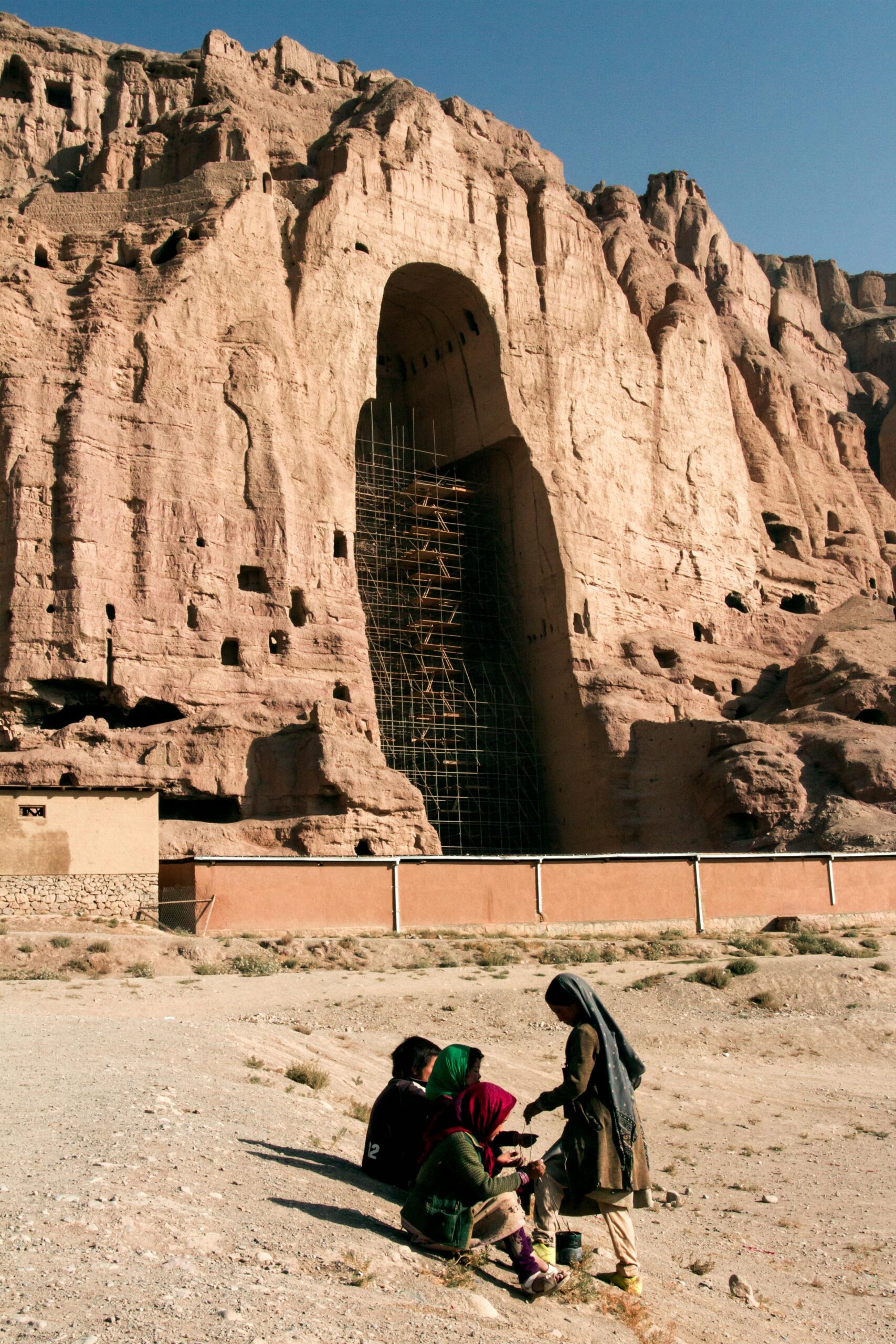
Photo credit: Ali Azad/Pexels
Key Comment
In this reflective interview, Dr Sharifullah Dorani explains how The Lone Leopard emerged from lived experience, scholarly depth, and a desire to give voice to ordinary Afghans whose stories were overshadowed by decades of conflict. His remarks illuminate the emotional labour, cultural memory, and historical precision behind the novel.
Interview Summary
In this thoughtful interview for the Author Anthony Avina Blog, Dr Sharifullah Dorani offers a deeply personal account of the origins of The Lone Leopard and the experiences that shaped him as a writer. Born and raised in Kabul, he recalls surviving the violent collapse of the Najibullah regime in 1992, when mujahideen factions turned the city into a battleground, destroying neighbourhoods, displacing families, and fracturing communities along sectarian and ethnic lines. Sheltering in basements while rockets fell on Kabul, he resolved—if he lived—to one day write honestly about what ordinary Afghans endured. Years later, after resettling in the United Kingdom and completing his higher education, that promise matured into a twelve-year writing project supported by extensive research and nearly a thousand consulted sources. The result was The Lone Leopard, a novel that blends history, memory, and storytelling to preserve a lived Afghan narrative.
Dr Dorani explains that the novel is fundamentally driven by Afghan perspectives. Its protagonist, Ahmad, reflects the emotional and moral challenges experienced by Afghans over four decades of war and exile. Through Ahmad and the main characters—Frishta, Wazir and Baktash—the book explores cultural principles such as honour, courage, justice, respect for parents, faith, and forgiveness, alongside darker forces including prejudice, jealousy, and betrayal. Their intertwined stories illuminate how national upheavals reshape friendships, families, and identities. The novel is also a commentary on generational responsibility: he hopes future Afghans will recognise the consequences of division and the enduring need for unity, inclusion, and empathy.
He notes that the book spans several genres—literary fiction, women’s fiction, young adult, coming-of-age, and war drama—but he ultimately views it as historical fiction, grounded in his academic training in international relations and Afghan history. Its portrayal of Kabul in the 1980s–2010s is therefore both intimate and historically informed.
Asked about his writing journey, Dr Dorani emphasises discipline: reading widely, researching rigorously, and writing consistently.
Overall, the interview presents Dr Dorani as a writer motivated by memory, responsibility, and a profound desire to humanise Afghanistan for readers across the world.
➡Link to the Interview: Interview with Author Sharifullah Dorani
*Dr Sharifullah Dorani holds a PhD from Durham University on America’s Afghanistan War, a Master of Laws from University College London, and a degree in law from the University of Northampton, all in the UK. He is the author of numerous scholarly articles and two acclaimed books: The Lone Leopard, a novel set in Afghanistan, and America in Afghanistan, published by Bloomsbury Publishing. He is the founder of CEPSAF and serves as the South Asia and Middle Eastern Editor at CESRAN International. All of Dr Dorani’s work is written to the highest academic standards, is widely indexed through Google Scholar, and is available in the libraries of hundreds of institutions worldwide, including Oxford and Harvard.