
Interviewer: Dr Rahman Dag
Interviewee: *Dr Sharifullah Dorani
Original Publication: CESRAN International
Publication Date: 21 July 2019
Photo credit: Polina Zimmerman/Pexels
Key Comment
Dr Dorani argues that the foreign policy of the Donald Trump Administration represented a sharp break from prior U.S. traditions: more unilateral, more transactional, and more sceptical of alliances. He frames Trump’s worldview as shaped by populism, mercantilist instincts, and an unconventional approach to presidential authority, producing outcomes that unsettled partners and accelerated geopolitical uncertainty.
Interview Summary
In this wide-ranging interview, Dr Rahman Dag speaks with Dr Sharifullah Dorani about the evolution of United States foreign policy under President Donald Trump, situating the Trump years within the broader sweep of America’s post-2001 engagement with the world. Drawing on insights from America in Afghanistan: Foreign Policy and Decision Making from Bush to Obama to Trump, Dr Dorani explains how Trump’s worldview, instincts, and political language marked a significant departure from his predecessors.
At the centre of the discussion is Trump’s conviction that the United States had shouldered disproportionate burdens for decades. According to Dr Dorani, Trump believed allies had relied too heavily on American security guarantees, contributing too little in return. His repeated criticism of NATO defence spending, his grievances about America financing global stability, and his scepticism toward long-term commitments — from Europe to Asia — demonstrated a foreign policy rooted in cost calculations rather than in shared values or traditional alliance management.
Dr Dorani notes that while previous administrations saw America’s global presence as mutually reinforcing — securing allies while advancing U.S. strategic interests — Trump approached these relationships transactionally. This produced uncertainty among partners, many of whom struggled to interpret whether his statements were negotiating tactics, personal views, or indications of policy change. The result, he argues, was an atmosphere in which allies felt compelled to diversify their diplomatic options.
The interview places these debates within a shifting international order. Although the United States remains the most powerful global actor, Dr Dorani emphasises that the rise of other influential states has gradually diluted America’s ability to shape outcomes unilaterally. The expanding economic presence of China, growing regional activism by Russia, and the emergence of middle powers with their own agendas have created a more diffuse global landscape. In this environment, Trump’s unilateralism often made coordination more difficult at precisely the moment when multipolarity was becoming more pronounced.
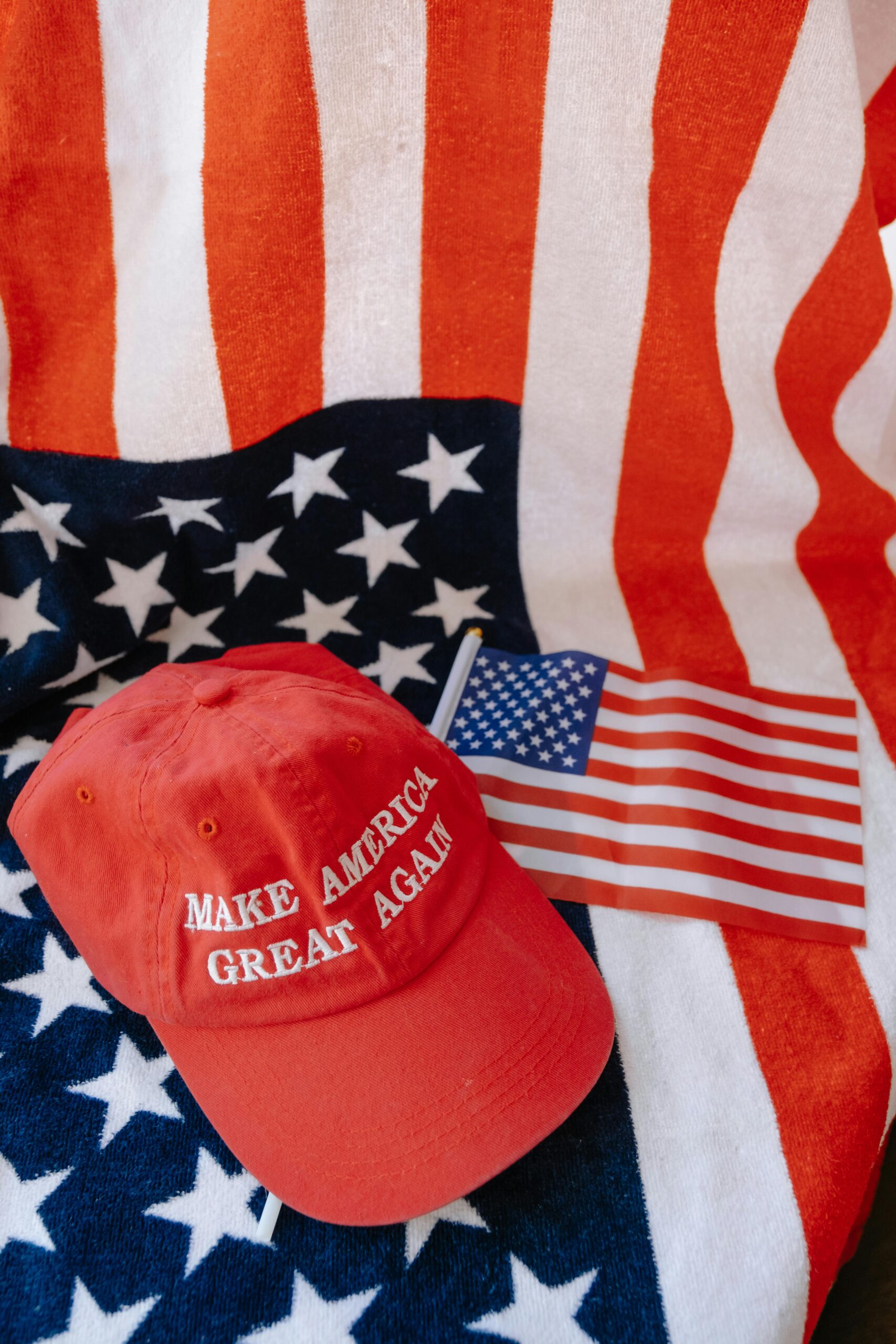
A key theme is Trump’s “Make America Great Again” narrative. Dr Dorani explains that this approach fused nationalism, protectionism, and a critique of globalisation. Trump’s withdrawal from multinational agreements, renegotiation of trade deals, and constraining of immigration reflected an attempt to reclaim what he saw as lost sovereignty. Yet these moves also unsettled the post-war norms that had enabled American power to flourish. For many observers, Dr Dorani notes, Trump was redefining leadership as a narrower form of national self-interest rather than the stewardship role adopted by earlier administrations.
This reorientation was evident in economic policy. Trump’s tariffs, challenges to the World Trade Organization, and confrontational posture toward China generated a geopolitical contest largely fought through trade and technology. Dr Dorani observes that this represented a turning point: economic instruments became central to geopolitical rivalries, often overshadowing diplomacy and institutional cooperation.
The interview then turns to conflict zones. In Afghanistan, Trump vacillated between recognising the strategic risks of a rapid withdrawal and voicing frustration with the mission’s length and cost. Dr Dorani highlights that Trump’s early South Asia strategy initially increased military pressure and pushed for reforms, but his scepticism towards “forever wars” soon reasserted itself, shaping the conditions under which later negotiations were pursued. In Syria, too, his intention to reduce America’s footprint created unease among partners and prompted debates about the consequences of a premature drawdown.
In East Asia, Dr Dorani discusses how the U.S.–China rivalry framed Trump’s approach to North Korea. While Trump sought Chinese leverage over Pyongyang, the summits with Kim Jong Un produced limited durable commitments, illustrating how symbolic breakthroughs did not necessarily translate into structural change.
The conversation concludes with reflections on the limits of U.S. interventionism. Comparing the experiences of Iraq, Syria, and contemporary crises such as Venezuela, Dr Dorani notes that the political appetite for new military engagements has diminished significantly among the American public. Finally, he cautions that while ISIS has lost territorial control, its networks and ideology persist, and past experience warns against declaring victory too soon.
Taken together, the interview offers a nuanced account of how the Trump presidency reconfigured U.S. policy: more unilateral, more transactional, and more sceptical of traditional alliances. Through Dr Dorani’s historically grounded perspective, the discussion highlights both the enduring strengths of the United States and the constraints it faces within an increasingly complex and competitive global order.
➡Link to the Interview: Interview with Dr Sharifullah Dorani on American Foreign Policy under the Trump Presidency
*Dr Sharifullah Dorani holds a PhD from Durham University on America’s Afghanistan War, a Master of Laws from University College London, and a degree in law from the University of Northampton, all in the UK. He is the author of numerous scholarly articles and two acclaimed books: The Lone Leopard, a novel set in Afghanistan, and America in Afghanistan, published by Bloomsbury Publishing. He is the founder of CEPSAF and serves as the South Asia and Middle Eastern Editor at CESRAN International. All of Dr Dorani’s work is written to the highest academic standards, is widely indexed through Google Scholar, and is available in the libraries of hundreds of institutions worldwide, including Oxford and Harvard.