
By Dr Sharifullah Dorani*
‘Depending on who you talked to, our mission in Afghanistan was either narrow (wiping out al-Qaeda) or broad (transforming the country into a modern, democratic state that would be aligned with the West)…my first priority was to make sure our agencies…were aligned around a clearly defined mission and a coordinated strategy.’[1] President Obama
Introduction
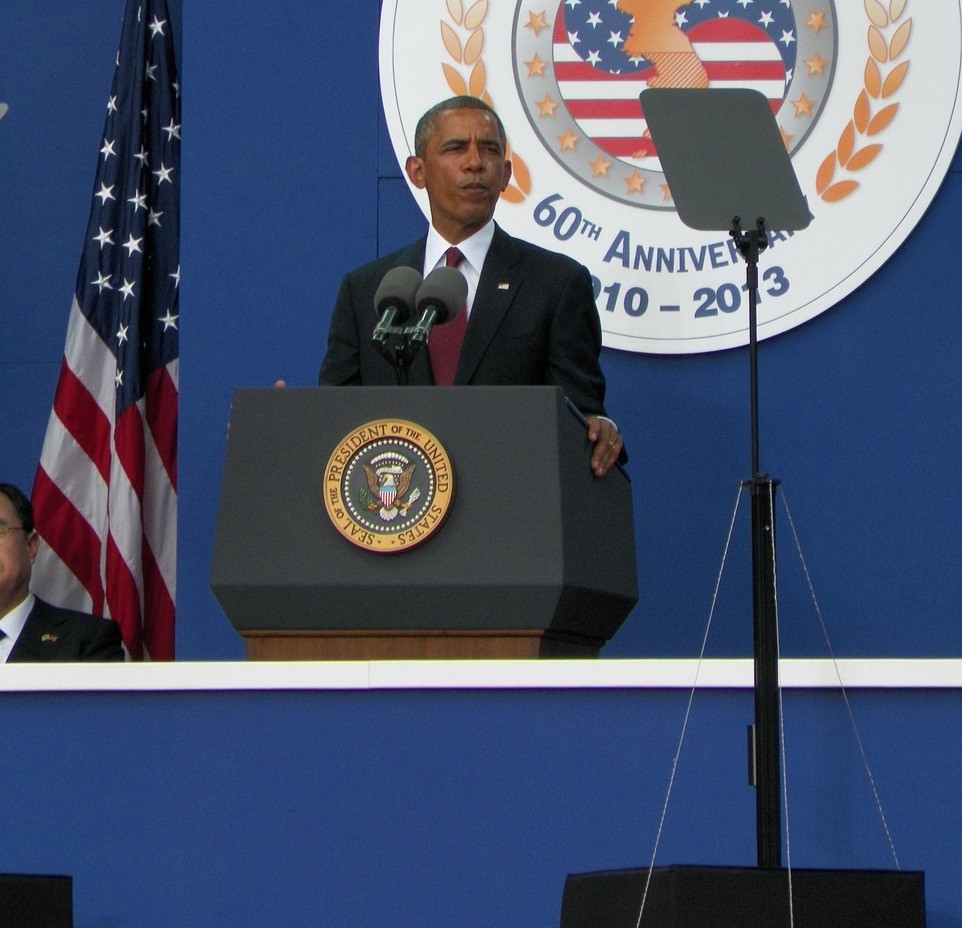
On December 1, 2009, President Barack Obama announced the decision to deploy an additional 30,000 troops (+3,000 enablers) to Afghanistan as part of the Global War on Terror (GWOT), or what Obama later termed ‘Countering Violent Extremism’. The decision was made following an extensive three-month review known as ‘Af-Pak’. The review consisted of approximately nine/ten sessions, discussing almost all aspects of the Af-Pak strategy from top to bottom. The two opposing sides (and their supporters), however, made their own interpretations of the decision to surge in Afghanistan. Others also offered interpretations different from those of the two camps above. I disagree with all of the above interpretations and offer my own based on my research.
This article tries to explain which group, if any, Obama listened to, and what the end strategy became.
The interpretations of the Biden camp and the military camp
The military camp and its supporters thought the final decision supported Petraeus’s counterinsurgency strategy.[2]
Petraeus believed that he received most of what he had asked for, but, to avoid embarrassment, Obama reduced the number by 10,000. If the President had offered him at the beginning of the review the strategy he announced on December 1, 2009, Petraeus would have grabbed it without hesitation because he could always obtain the missing 10,000 troops from NATO. In July 2011, Petraeus would show progress on the ground and tell the President that the conditions on the ground required the 30,000 troops to stay longer to consolidate the progress, and thus he could extend the duration.[3]
The Biden camp and its supporters, on the other hand, thought the end decision did not support the counterinsurgency strategy.[4] Biden believed the strategy was not aimed at protecting all Afghans, but certain provinces, such as Kandahar and Kabul, in order to prevent the Karzai Government from being toppled by the Taliban until the Afghan National Security Forces were increased.[5]
Senior Advisor and Coordinator for Afghanistan-Pakistan Douglas E. Lute agreed with Biden, adding that Obama ‘fast-forwarded and figured’ Afghanistan would most likely be as bad in 2011 as it was in 2009, yet he did this 18-month surge to prove, in effect, that it could not be done. Yes, the surge was expensive, but not so much that the country could not afford it. By 2011, Obama would have given the military camp ‘its day in court and the United States would not be seen as having been driven off the battlefield’.[6] The only way Lute could explain the final decision was that the President had treated the military as another political constituency that had to be accommodated, as he did not think the review added up to the decision.
According to Lute, Obama could have said no to the military leaders, arguing that the military had not yet provided him with results of the 33,000 troops the President had deployed early in the year, or simply saying that Obama did not see the situation was deteriorating in Afghanistan.[7] But the President did not do so for reasons explained in my article.
Area experts’ interpretations of the surge decision
Yet there were others who claimed that neither did Obama employ a full-on counterinsurgency strategy nor Biden’s counterterrorism-plus-strategy. Rather, it approved a hybrid: a counterinsurgency strategy in some areas and a counterterrorism-plus in others. It was a middle way, making both sides happy.[8]
There were even some who thought it was a counterinsurgency strategy but in a ‘hurry’, or a ‘COIN equivalent of putting a DVD into a player and fast-forwarding the movie at thirty times its normal rate’,[9] because the strategy required ‘time, patience and lots of troops’,[10] but Obama approved none of them adequately.
My analysis and interpretation
Obama’s statements during the Af-Pak review, as well as his December 3, 2009, speech, nevertheless show that he approved neither a counterinsurgency strategy or counterterrorism-plus-strategy, nor some kind of a hybrid strategy. Not just a counterinsurgency strategy but even something less would have required many more troops, who would have had to stay in Afghanistan for at least seven years. Obama allowed none. Helmand and Kandahar were two out of 34 provinces in Afghanistan in which most of the surge troops were going to be deployed. Even if one accepted that a counterinsurgency strategy was going to be applied in the two intended provinces, the other 32 provinces were not going to experience COIN or counterinsurgency operations. Petraeus and McChrystal might have issued orders to pursue a counterinsurgency strategy in ‘the entire theatre’ in Afghanistan,[11] but NATO soldiers in those provinces were hardly going to follow orders incompatible with their caveats (covered in one of my articles). Two provinces could hardly make it a hybrid strategy.
A counterterrorism-plus-strategy required a maximum of 20,000 to 30,000 to remain in Afghanistan but, instead of reducing the 68,000 US troops already there, Obama brought the number to 100,000. For the President, a counterterrorism-plus-strategy would have prolonged their stay, and in the long run would have been more expensive. Like McChrystal’s counterinsurgency strategy, a counterterrorism-plus-strategy was similarly open-ended. With fewer US troops on the ground, training and increasing the Afghan National Security Forces would have taken many more years; and if one went by Petraeus and McChrystal’s assumption, a counterterrorism-plus-strategy would have never enabled bringing about the conditions in which they could increase the Afghan National Security Forces in size and ability. Obama, therefore, rejected both as strategies.[12]
Though Obama listened to the technically military terms of counterterrorism and COIN or counterinsurgency operations, he did not seem to have thought, by the end, in those technical terms. What Obama seemed to have had in mind was that the 30,000 troops would increase the number of US troops in Afghanistan in the short run, but in the long run US forces would stay much shorter, because his strategy was designed to Afghanise the mission.[13] It was an ‘escalate-then-exit strategy’.[14]
The surge would create conditions to train more Afghan National Security Forces, who would take over from US forces. Obama and his aides, as well as Gates, saw the Afghan National Security Forces as their ticket out of Afghanistan. He was going to set in motion a strategy to bring to an end, or at least limit, US engagement in an ‘endless’ war. Obama had only one objective in mind: everything they did, he asked his advisors a few days before he made the decision, should be focused on how it would help them to thin out their presence in Afghanistan. ‘It was a surge intended to get the United States out’.[15] That was the main goal! There would be no flexibility in July 2011; it would only be about the flexibility in how the US would draw down, not if it would draw down.[16]
July 2011 would be the beginning of the end of US involvement in Afghanistan, the start of the transition, as the Afghan National Security Forces would take over. The President would not hear anyone saying that they were doing fine, but they would be better to do more. He asked his advisors emphatically that, if they disagreed, they should tell him there and then, as he did not want them to say one thing to him and another to their organisations or the media. Nobody disagreed, and the military leaders went on supporting Obama’s decision in their testimonies.[17]
While Petraeus aimed at winning the war,[18] the non-interventionist Obama aimed at ending the war, as, according to Gates, for the President, ‘it was all about out’.[19] According to many area experts, Osama bin Laden laid a trap in 2001 and was reasonably confident that he would draw the US into Afghanistan (and other Muslim lands) so that he could bleed ‘America to the point of bankruptcy’.[20] Obama seemingly wanted to get the US out of the trap, committing to an extent so that the American responsibility, capabilities, resources and interests allowed him to do, something his predecessor and the military did not take into account.[21]
For Obama, McChrystal’s objectives were way beyond US responsibility, means and interests, failing to appreciate the connection between US national security and its economy.[22]
But the President found it difficult to refuse McChrystal’s demands in 2009, due to the military pressure and divided public opinion.[23] Otherwise Obama, if he had the choice, would not have increased the troops, but rather authorised 5,000 to 10,000 troops to train and increase the Afghan National Security Forces.[24] He did so because the military insisted. The reasons as to why he could not refuse the military, as discussed in one of my articles, were Petraeus’s larger-than-life character, the pressure applied by influential actors from Congress/press/some outside actors (almost half the public opinion, including ordinary Americans, wanted him to surge), and the Gates-and-Clinton factor. He could equally not refuse his political advisors and the Democrats in Congress for the reasons explained in my other article entitled. Therefore, the resulting decision was a compromise.
American journalist James Mann and many others implied that Obama was not forced into the decision by considerations for his political security in the future, because he believed in the necessity of the Afghanistan War. Mann rejected the argument that Obama knew that the Afghanistan War was ‘unjust’ and ‘strategically insignificant’, but he still called for increasing the efforts in Afghanistan because he wanted to show he was not a dove or a pacifist.[25]
If one was to accept this view that Afghanistan was used for political reasons, Mann maintained, then the same could be true in relation to Iraq; that is, supporting the Afghanistan War and opposing the Iraq War was all a matter of politics, not principle.
Obama believed in the legitimacy and importance of the Afghanistan War from 2002 up to the first year of his presidency, including during the Af-Pak review. Obama believed that if the US did not do the surge and increase its efforts in Pakistan, then Al-Qaeda would find safe haven in Afghanistan or Pakistan and pose a serious threat to the US. Simply put, Mann concludes, Obama meant it when he said he would escalate the war.[26]
While I agree with Mann that Obama saw the Afghanistan War as a relevant war (not important, though, as explained below), it disagrees with the argument that he purely did so because he believed in it. He did so because supporting the Afghanistan War (a war that President George W Bush was accused of having neglected) also brought Senator Obama a great deal of political support from the American people. Gates in his memoir revealed that Hillary Clinton and Obama went against the surge in Iraq in 2006 purely for political purposes.[27]
If Obama refused the Iraq surge for political purposes, could he not support the Afghanistan War for the same rationales, too? If the President really believed in the Afghanistan War, why was he backing down in the Af-Pak review? To claim he did not take into consideration his political future while making the decision would ignore the endless advice his aides and Biden gave him during the review, particularly the advice on Congress’s eventual response (that is, Congress might stop its support for an endless and costly war).
Gates in his memoir revealed that, unlike President Bush, whom Gates described as a man of ‘character…convictions…and…action’, Obama and his aides gave a great deal of thought to the political implications of presidential decisions, the surge decision included;[28] and this was something for which Petraeus disliked many of Obama’s inner circle and consequently did not give much weight to their politically driven pieces of advice.[29]
The finding of my research also disagrees with Mann saying Obama believed in the legitimacy and necessity of the Afghanistan War up to the first year of his presidency. The President believed in it up to the end of his presidency, but not the way the military wanted him: win at any cost. He wanted a smaller presence in Afghanistan with limited objectives compatible to US national security interests; a limited presence to enable the US to hunt terrorism and to strengthen the capacity of the Afghanistan government to fight the war with the Taliban.[30]
The finding of research, however, partly agrees with Mann and Georgetown University’s Professor Stephen Wayne’s assertion that the final decision was consistent with Obama’s belief system (beliefs or views).[31] It agrees partly because the decision was in line with Obama’s belief system but not the one Wayne referred to, the old one (the Afghanistan War was a ‘good’ war and hence more resources needed to put it right), but the one Obama developed during the Af-Pak review.
As seen in my previous article, Obama developed doubts about the Afghanistan War. He, nevertheless, knew that Afghanistan was relevant in relation to their goal to disrupt, degrade and defeat Al-Qaeda; it was relevant for their counterterrorism campaign. He also feared that an Afghanistan overtaken by the Taliban, despite Biden’s argument to the contrary, would prove detrimental to US national security interests, as well as to him and his party’s future political security.
But he found it difficult to agree with the military that the US would stabilise Afghanistan due to the ‘Pakistan problem’, the absence of good governance, the presence of an ‘incompetent’ Afghan National Security Forces, and the wavering NATO support.[32] When Obama said that the US would work with Pakistan to go against terrorist sanctuaries, he himself did not believe it would happen.[33] In short, Obama did not believe the strategy would work. He was ‘outright convinced’ that it would fail.[34]
For Obama, the Afghanistan War was an ‘endless’ civil war (no longer necessary or good), and, of course, an endless war by its definition could not be won.[35] He wanted to bring an end to a scenario where US forces were involved in fighting a civil war in favour of the Karzai Government against the the Taliban.[36] It was an Afghan war and should therefore be fought by the Afghans with light US financial, political and technical support. According to Gates, Obama’s political and philosophical preferences conflicted with his own pro-war public rhetoric during the presidential campaign.[37]
Michael O’Hanlon from the Brookings Institution and Professor Robert Singh, professor of politics at Birkbeck, University of London, asserted that Obama’s decision demonstrated to the US public and Congress that he was now beginning to end the war that had fatigued them, though simultaneously trying to ‘be muscular enough to create a chance to win the war while at the same time keeping the war’s critics acquiescent’.[38]
Obama, however, never intended to send a message that the US intended to ‘win’. During the research for this article (and my other ones), I never came across a sentence in which Obama, after becoming President, mentioned the word ‘winning’. Unlike the military, he did not believe that the US would win the way the military believed (defeat the Taliban and establish a stable Afghanistan). For Obama, the definition of success in Afghanistan was handing over responsibility to the Afghans.[39] The war could go on, or be a stalemate, but as long as the Afghan state, however inadequate, was able to safeguard US national interests (the US and the allies being safe) Obama was more than happy.
Unlike Bush Junior, Obama was ‘unsentimental and capable of being ruthless’, someone who intellectualised everything and felt little inwardly. Unlike Bush, Obama lacked passion about the Afghanistan War and the mission the military forces were fighting for.[40] Unlike the military, Obama did not seem to be concerned about Afghans, their security, or their human rights. Nor did he think in moral terms: that is, it was US moral duty to bring about a stable, secure and fully democratic Afghanistan. It is not that he did not desire these fortunes for Afghanistan, but, due to US political and economic realities, as well as Afghanistan’s own complexities (discussed in my other article), he saw their achievements as impossible.
Obama’s views (and, of course, Biden’s), interestingly, were similar to those of former Secretary of Defense Donald Rumsfeld,[41] whereas Petraeus sounded more like President Bush Junior. Obama did not see leaving a stable and secure Afghanistan to be the responsibility of the US. He sounded frustrated when Petraeus suggested that it was. The difference between the President and the military leaders was simple: Petraeus and McChrystal wanted to win the war by defeating the Taliban, even if it took another decade,[42] whereas all Obama wanted was to end the war by withdrawing;[43] though a politically responsible withdrawal. Obama had received good praise from the American public (and arguably won the presidency on his opposition to the Iraq War) for having begun to end the Iraq War, while Petraeus had received praise for having turned a failing war into a relative success. The President and his general, therefore, saw their success in different outcomes for Afghanistan.
The caveat was something that Obama saw as a weapon to bring the Afghanistan War to a responsible end. It was also something that reassured the Democratic Party, his advisors, and the public that the commitment was not open-ended. But Petraeus saw the caveat as insignificant because, in mid-2011, troops would be withdrawn on the basis of the conditions (which were added due to his insistence) in the theatre, and if he showed progress (as seen in my one of my articles, he was optimistic he would), he would postpone the withdrawal.
At this stage, however, it was too early to decide whose bureaucratic positions and beliefs (or belief systems and images) prevailed. It was also difficult to ascertain what exactly the strategy was. It all depended on the evaluation in the twelve months and then in July 2011. Numerous factors in 2011 ─ the accuracy of assumptions by the two opposing sides(see my other article), bureaucratic positions of the policymakers, political realities within the US and outside, the level of terrorists’ threats within the US, a possible nuclear war between Pakistan and India, and many others ─ would determine which way US strategy would lean: a counterinsurgency strategy or a counterterrorism-plus-strategy.
But as things stood in December 2009, the Biden camp considered itself and consequently Obama the winner, whereas the Petraeus camp alleged it was the military. Many, however, claimed that Obama aimed to make both sides happy due to the divided domestic pressure.
Thus, Obama, as far as long–term US involvement was concerned, made none but himself happy: in accordance with his belief system and images of the Afghanistan War, his decision set out a policy trajectory to considerably narrow US involvement in Afghanistan; a policy that, due to its limits, could not guarantee success in its implementation phase. The reason he could not act upon his beliefs (or belief system and images) for the decision to surge in 2009 was due to bureaucratic politics and the pressure by domestic actors. The three variables had even more influence upon the resulting policy when the decision-making process became more and more public.
Concluding remarks
The divide over the Afghanistan War forced Obama to form a decision that reached for a compromise: he gave the military almost the number they asked for, but for a limited period with limited objectives. However, as far as long-term US involvement was concerned, he listened to none but himself; he employed neither a counterinsurgency strategy nor a counterterrorism-plus-strategy, but instead applied the escalate-then-exit strategy. The decision was more in line with Obama’s belief system: to bring a responsible end to the Afghanistan War by beginning to transition security in July 2011 to the Afghan National Security Forces (ANSF). Had it not been for Petraeus and McChrystal’s bureaucratic muscle (strengthened by Gates and Clinton), and divided public opinion, Obama would only have approved 5,000 to 10,000 enablers to train and assist the ANSF, who could do the fighting. In sum, bureaucratic politics, conflicting belief systems and images, and domestic influences (split public opinion and dire US economic conditions) shaped the end strategy, which could hardly guarantee ‘success’ given its limitations.
References
Baker, Peter, ‘How Obama Came to Plan for ‘Surge’ in Afghanistan’, The New York Times, December 5, 2009.
Bernard Gwetzman interviews Max Boot. ‘The Road to Negotiation in Afghanistan’, the Council on Foreign Relations, October 18, 2010.
Bird, Tim and Alex Marshall. 2011. Afghanistan: how the west lost its way. New Haven: Yale University Press.
Chandrasekaran, Rajiv. 2012. Little America: the war for Afghanistan. New York: Alfred A. Knopf.
Clinton, Hillary R., Afghanistan: Assessing the Road Ahead, ‘Secretary Of State Hillary Rodham Clinton Testimony Before The Senate Foreign Relations Committee Washington, DC’, Hearing Before Senate Committee on Foreign Relations, December 3, 2009, <http://www.foreign.senate.gov/imo/media/doc/ClintonTestimony091203a1.pdf>.
Dodge, Toby, and Nicholas Redman. 2011. Afghanistan: to 2015 and beyond, London: International Institute for Strategic Studies.
Gates, Robert, Afghanistan: Assessing the Road Ahead, ‘Statement of Secretary of Defense Robert Gates Senate Foreign Relations Committee’, Hearing Before Senate Committee on Foreign Relations, December 3, 2009, <http://www.foreign.senate.gov/imo/media/doc/GatesTestimony091203a1.pdf>.
Gates, Robert Michael. 2014. Duty: memoirs of a Secretary at war.
Gordon, Philip H., ‘Can the War on Terror Be Won? How to Fight the Right War’, Foreign Affairs, November/December 2007, <http://www.foreignaffairs.com/articles/63009/philip-h-gordon/can-the-war-on-terror-be-won>.
Kerry, ‘Chairman Kerry Opening Statement At Hearing With Secretary Clinton, Secretary Gates and Admiral Mullen’, Senate Committee on Foreign Relations, December 3, 2009, <http://www.foreign.senate.gov/imo/media/doc/KerryStatement091203a1.pdf>.
Mann, Jim. 2012. The Obamians: the struggle inside the White House to redefine American power. New York: Viking.
Mullen, Michael G., Afghanistan: Assessing the Road Ahead, ‘Statement of Admiral Michael G. Mullen, US Chairman of the Joint Chiefs of Staff Before the 111th Congress Senate Foreign Relations Committee’, Hearing Before Senate Committee on Foreign Relations, December 3, 2009, <http://www.foreign.senate.gov/imo/media/doc/MullenTestimony091203a1.pdf>.
Obama, Barack. Remarks by the President in Address to the Nation on the Way Forward in Afghanistan and Pakistan. [The White House], 1 December 2009, <https://obamawhitehouse.archives.gov/blog/2009/12/01/new-way-forward-presidents-address>.
Obama, Barack. 2020. A Promised Land. Viking.
O’Hanlon, Michael, ‘Staying Power: The U.S. Mission in Afghanistan Beyond 2011’, The Brookings Institution, September/October, 2010 <http://www.brookings.edu/research/articles/2010/08/25-afghanistan-ohanlon>.
Petraeus, David H., ‘Statement of General David H. Petraeus to the Senate Foreign Relations Committee’, Hearing Before Senate Committees on Foreign Relations, December 9, 2009, <http://www.foreign.senate.gov/imo/media/doc/PetraeusTestimony091209a1.pdf>.
Singh, Robert. 2012. Barack Obama’s post-American foreign policy: the limits of engagement. London: Bloomsbury academic.
Stolberg, Sheryl G. and Helene Cooper, ‘Obama Adds Troops, but Maps Exit Plan’, The New York Times, December 1, 2009.
Wayne, Stephen J., ‘Presidential Character and Judgment: Obama’s Afghanistan and Health Care Decisions’, Presidential Studies Quarterly 41, no. 2 (June), 2011.
Woodward, Bob. 2010. Obama’s wars. New York; Simon & Schuster.
[1] Obama, Barack. 2020. A Promised Land. Viking, p.316.
[2] Petraeus, David H., ‘Statement of General David H. Petraeus to the Senate Foreign Relations Committee’, Hearing Before Senate Committees on Foreign Relations, December 9, 2009, <http://www.foreign.senate.gov/imo/media/doc/PetraeusTestimony091209a1.pdf>; Clinton, Hillary R., Afghanistan: Assessing the Road Ahead, ‘Secretary Of State Hillary Rodham Clinton Testimony Before The Senate Foreign Relations Committee Washington, DC’, Hearing Before Senate Committee on Foreign Relations, December 3, 2009, <http://www.foreign.senate.gov/imo/media/doc/ClintonTestimony091203a1.pdf>;Mullen, Michael G., Afghanistan: Assessing the Road Ahead, ‘Statement of Admiral Michael G. Mullen, US Chairman of the Joint Chiefs of Staff Before the 111th Congress Senate Foreign Relations Committee’, Hearing Before Senate Committee on Foreign Relations, December 3, 2009, <http://www.foreign.senate.gov/imo/media/doc/MullenTestimony091203a1.pdf>; Gates, Robert, Afghanistan: Assessing the Road Ahead, ‘Statement of Secretary of Defense Robert Gates Senate Foreign Relations Committee’, Hearing Before Senate Committee on Foreign Relations, December 3, 2009, <http://www.foreign.senate.gov/imo/media/doc/GatesTestimony091203a1.pdf>; Bernard Gwetzman interviews Max Boot. ‘The Road to Negotiation in Afghanistan’, the Council on Foreign Relations, October 18, 2010; Stolberg, Sheryl G. and Helene Cooper, ‘Obama Adds Troops, but Maps Exit Plan’, The New York Times, December 1, 2009.
[3] Woodward, Bob. 2010. Obama’s wars. New York; Simon & Schuster, pp. 332, 338. Incidentally, it was Petraeus who insisted that withdrawal should be based on conditions on the ground, Woodward, Bob. 2010. Obama’s wars. New York; Simon & Schuster, p. 331.
[4] Woodward, Bob. 2010. Obama’s wars. New York; Simon & Schuster, pp. 332, 338; Mann, Jim. 2012. The Obamians: the struggle inside the White House to redefine American power. New York: Viking, pp. 137-138; Kerry, ‘Chairman Kerry Opening Statement At Hearing With Secretary Clinton, Secretary Gates and Admiral Mullen’, Senate Committee on Foreign Relations, December 3, 2009, <http://www.foreign.senate.gov/imo/media/doc/KerryStatement091203a1.pdf>.
[5] Woodward, Bob. 2010. Obama’s wars. New York; Simon & Schuster, p. 332.
[6] Woodward, Bob. 2010. Obama’s wars. New York; Simon & Schuster, p. 338.
[7] Woodward, Bob. 2010. Obama’s wars. New York; Simon & Schuster, p. 338.
[8] O’Hanlon quoted in Singh, Robert. 2012. Barack Obama’s post-American foreign policy: the limits of engagement. London: Bloomsbury academic, p. 75; O’Hanlon, Michael, ‘Staying Power: The U.S. Mission in Afghanistan Beyond 2011’, The Brookings Institution, September/October, 2010 <http://www.brookings.edu/research/articles/2010/08/25-afghanistan-ohanlon>; Chandrasekaran, Rajiv. 2012. Little America: the war for Afghanistan. New York: Alfred A. Knopf, p. 128.
[9] Bird, Tim and Alex Marshall. 2011. Afghanistan: how the west lost its way. New Haven: Yale University Press, p. 256.
[10] Mann, Jim. 2012. The Obamians: the struggle inside the White House to redefine American power. New York: Viking, pp. 138-139.
[11] Petraeus, David H., ‘Statement of General David H. Petraeus to the Senate Foreign Relations Committee’, Hearing Before Senate Committees on Foreign Relations, December 9, 2009, <http://www.foreign.senate.gov/imo/media/doc/PetraeusTestimony091209a1.pdf>; Clinton, Hillary R., Afghanistan: Assessing the Road Ahead, ‘Secretary Of State Hillary Rodham Clinton Testimony Before The Senate Foreign Relations Committee Washington, DC’, Hearing Before Senate Committee on Foreign Relations, December 3, 2009, <http://www.foreign.senate.gov/imo/media/doc/ClintonTestimony091203a1.pdf>.
[12] Obama, Barack. Remarks by the President in Address to the Nation on the Way Forward in Afghanistan and Pakistan. [The White House], 1 December 2009, https://obamawhitehouse.archives.gov/blog/2009/12/01/new-way-forward-presidents-address
[13] Obama, Barack. Remarks by the President in Address to the Nation on the Way Forward in Afghanistan and Pakistan. [The White House], 1 December 2009, <https://obamawhitehouse.archives.gov/blog/2009/12/01/new-way-forward-presidents-address>.
[14] Baker, Peter, ‘How Obama Came to Plan for ‘Surge’ in Afghanistan’, The New York Times, December 5, 2009.
[15] Woodward, Bob. 2010. Obama’s wars. New York; Simon & Schuster, p. 303.
[16] Woodward, Bob. 2010. Obama’s wars. New York; Simon & Schuster, p. 301; Baker, Peter, ‘How Obama Came to Plan for ‘Surge’ in Afghanistan’, The New York Times, December 5, 2009,
[17] Woodward, Bob. 2010. Obama’s wars. New York; Simon & Schuster, pp. 326-327; Baker, Peter, ‘How Obama Came to Plan for ‘Surge’ in Afghanistan’, The New York Times, December 5, 2009,
[18] Chandrasekaran, Rajiv. 2012. Little America: the war for Afghanistan. New York: Alfred A. Knopf, p. 222.
[19] Gates, Robert Michael. 2014. Duty: memoirs of a Secretary at war, p. 557.
[20] Gordon, Philip H., ‘Can the War on Terror Be Won? How to Fight the Right War’, Foreign Affairs, November/December 2007, <http://www.foreignaffairs.com/articles/63009/philip-h-gordon/can-the-war-on-terror-be-won>;Dodge, Toby, and Nicholas Redman. 2011. Afghanistan: to 2015 and beyond, London: International Institute for Strategic Studies, pp. 48, 57-58.
[21]Dodge, Toby, and Nicholas Redman. 2011. Afghanistan: to 2015 and beyond, London: International Institute for Strategic Studies, p. 50.
[22] Obama, Barack. Remarks by the President in Address to the Nation on the Way Forward in Afghanistan and Pakistan. [The White House], 1 December 2009, <https://obamawhitehouse.archives.gov/blog/2009/12/01/new-way-forward-presidents-address>.
[23] Mann, however, implied that Obama was not forced into the decision by the military pressure, Mann, Jim. 2012. The Obamians: the struggle inside the White House to redefine American power. New York: Viking, p. 140. The finding of this research disagrees. To say he was not forced by bureaucratic pressure would ignore all the bureaucratic politics analysed in section three.
[24] Woodward, Bob. 2010. Obama’s wars. New York; Simon & Schuster, p. 312.
[25] Singh, Robert. 2012. Barack Obama’s post-American foreign policy: the limits of engagement. London: Bloomsbury academic, p. 86; Bird, Tim and Alex Marshall. 2011. Afghanistan: how the west lost its way. New Haven: Yale University Press, p. 220;Dodge, Toby, and Nicholas Redman. 2011. Afghanistan: to 2015 and beyond, London: International Institute for Strategic Studies, p. 61; Mann, Jim. 2012. The Obamians: the struggle inside the White House to redefine American power. New York: Viking, p. 140.
[26] Mann, Jim. 2012. The Obamians: the struggle inside the White House to redefine American power. New York: Viking, pp. 140-141.
[27] Gates, Robert Michael. 2014. Duty: memoirs of a Secretary at war, p. 376.
[28] Gates, Robert Michael. 2014. Duty: memoirs of a Secretary at war, pp. 96, 349-350.
[29] Woodward, Bob. 2010. Obama’s wars. New York; Simon & Schuster, p. 158.
[30] Obama, Barack. Remarks by the President in Address to the Nation on the Way Forward in Afghanistan and Pakistan. [The White House], 1 December 2009, https://obamawhitehouse.archives.gov/blog/2009/12/01/new-way-forward-presidents-address
[31] Wayne, Stephen J., ‘Presidential Character and Judgment: Obama’s Afghanistan and Health Care Decisions’, Presidential Studies Quarterly 41, no. 2 (June), 2011, pp. 291-305, pp. 291-292.
[32] Woodward, Bob. 2010. Obama’s wars. New York; Simon & Schuster, p. 320; Baker, Peter, ‘How Obama Came to Plan for ‘Surge’ in Afghanistan’, The New York Times, December 5, 2009,
[33] Stolberg, Sheryl G. and Helene Cooper, ‘Obama Adds Troops, but Maps Exit Plan’, The New York Times, December 1, 2009.
[34] Gates, Robert Michael. 2014. Duty: memoirs of a Secretary at war, pp. 483, 496.
[35] Obama, Barack. Remarks by the President in Address to the Nation on the Way Forward in Afghanistan and Pakistan. [The White House], 1 December 2009, <https://obamawhitehouse.archives.gov/blog/2009/12/01/new-way-forward-presidents-address>.
[36] Obama, Barack. Remarks by the President in Address to the Nation on the Way Forward in Afghanistan and Pakistan. [The White House], 1 December 2009, <https://obamawhitehouse.archives.gov/blog/2009/12/01/new-way-forward-presidents-address>.
[37] Gates, Robert Michael. 2014. Duty: memoirs of a Secretary at war, p. 568.
[38] O’Hanlon quoted in Singh, Robert. 2012. Barack Obama’s post-American foreign policy: the limits of engagement. London: Bloomsbury academic, p. 75; O’Hanlon, Michael, ‘Staying Power: The U.S. Mission in Afghanistan Beyond 2011’, The Brookings Institution, September/October, 2010 <http://www.brookings.edu/research/articles/2010/08/25-afghanistan-ohanlon>
[39] Kerry, ‘Chairman Kerry Opening Statement At Hearing With Secretary Clinton, Secretary Gates and Admiral Mullen’, Senate Committee on Foreign Relations, December 3, 2009, <http://www.foreign.senate.gov/imo/media/doc/KerryStatement091203a1.pdf>.
[40] Woodward, Bob. 2010. Obama’s wars. New York; Simon & Schuster, p. 38; Gates, Robert Michael. 2014. Duty: memoirs of a Secretary at war, pp. 298-299.
[41] A cheap strategy that did not strategically over-stretch the US on a catastrophic scale. According to Dodge and Redman, the awkward question that emerged in the Af-Pak review but nobody raised it explicitly was: ‘What if the Bush administration had it right the first time’ by avoiding ‘an ambitiously defined Afghanistan mission’, Dodge, Toby, and Nicholas Redman. 2011. Afghanistan: to 2015 and beyond. London: International Institute for Strategic Studies, p. 57
[42]Chandrasekaran, Rajiv. 2012. Little America: the war for Afghanistan. New York: Alfred A. Knopf, p. 222.
[43] Gates, Robert Michael. 2014. Duty: memoirs of a Secretary at war, pp. 229, 557.
*Sharifullah has a PhD from Durham University in the UK on America’s Afghanistan War. He has authored several articles and two acclaimed books: The Lone Leopard, a novel set in Afghanistan, and America in Afghanistan, published by Bloomsbury Publishing. Sharifullah is the founder of CEPSAF and the South Asia and Middle Eastern Editor at CESRAN International.