
Chapter Twenty-Nine
It’d been half an hour since we’d departed from Qandigul’s, and I’d heard nothing except discussions on the horror of the random bullets and yesterday’s fedayi attack, coupled with Mour blaming me for having thrown ourselves into a ‘burning fire’ and Nazigul’s gratefulness to Khudai that Shujah and I were safe and sound.
I asked Mour what she thought of Latifa.
‘She laughs with a qah-qah. Qandigul’s taught her no Pashtun manners,’ Mour said after a short silence.
A Toyota pulled out of a side road in front of us, forcing Shujah to jam on the brakes with a screeching noise. Mour and Nazigul screamed for Khudai’s help.
‘Have you gone mad?’ I shouted at the driver.
‘Donkeymen have become drivers in Kabul.’ Shujah didn’t exaggerate.
On our way to Latifa’s earlier on, vehicles carved, cut out, cut in, turned left from the right lane and right from the left lane, turned off a ‘no entry’ sign, and crossed red lights. Yet, no one raised an eyebrow as if it was the norm, not even the white-hat traffic policemen manning crossroads in the blazing heat.
We now drove smoothly. Nashenas sang at low volume from the cassette deck in Shujah’s Volga, or what Nazigul called yesterday ‘a portable carpet shop’, because every interior part was covered with Afghan handmade carpet.
Allowed to study with haleks in the same class but disallowed to hold a five-minute talk, in the presence of her parents, with someone she’d be spending the rest of her life with, I said after a silence. ‘Qandigul has taken tradition too far.’
‘She’ll have to keep the daughter forever if she isn’t willing to show her to the halek,’ Nazigul said from the rear seat.
Helicopters flew overhead as we drove past a green and white multistorey shopping mall on our left.
‘Islam encourages haleks and jelais to meet each other under supervision before they get engaged.’ It felt like I was talking to myself. I reckoned Mour saw me as the cause of today’s humiliation.
‘Do you see Chaman-e-Babrak anywhere?’ Shujah asked. Chaman-e-Babrak was where my classmate, Shafih, and his father used to bring their ‘champion’ dog to the dog-fighting tournament.
I didn’t.
‘This is it.’ Shujah pointed to four- or five-storey mansions and monstrous wedding halls lit with bright neon lights and mirrored glass, and surrounded by large concretebarriers. Armed men guarded them. Foreigners nicknamed this and the forty-metre street, which we drove on to Latifa’s, ‘Las Vegas’.
‘How on earth can we reduce pollution in Kabul if all land planned to be green townships is grabbed?’ Shujah dried his forehead with a handkerchief and stopped behind a line of cars, as long as the Soviet tanks going to Panjshir Valley to fight the mujahideen. The taxi driver from the front told us that the escort of a high-profile foreign ‘donkey’ to the Arg Palace had caused the traffic jam.
‘Here parents don’t put their daughters on display. They don’t want them to get stigmatised if they’re rejected. Other suitors may not come forward, thinking there was something wrong with the jelai. The rejection can even damage the jelai’s self-respect,’ Mour said. ‘In language colleges or universities, Jelaisdon’t chat with haleksto get chosen for wives. Students behave like brothers and sisters.’
A woman with a year-old sun-stricken-faced child begged for khairat, money. She pointed to the left, a makeshift camp made up of tents, saying they were war-displaced families from Helmand.
‘They’ll swarm if you give her money,’ Shujah said when he detected my hands moving into my pocket. He swore at the ‘fatherless’ beggar. She disappeared.
‘And here children listen to their parents. They don’t contradict them publicly.’ Mour got to the point.
Mour boiled; best to let her cool down.
Tilting herself to Mour’s side and fanning Mour with her purse, like a farmer trying to please his Khan, Nazigul told Mour not to worry, since we’d choose from the remaining three jelais. Nazigul hoped their families would allow their daughters to speak to me when I asked her about the possibility.
‘Confirm this before you take us next time,’ Shujah snapped at Nazigul over the drivers’ annoying showcase of their horns and a helicopter’s thumping.
Nazigul blushed, swearing she’d notified Qandigul of my presence. Qandigul’s sudden outburst had baffled Nazigul.
‘Why are you so insistent on seeing the jelai? Look at all the trouble it’s causing,’ Mour said after the beeps had died down.
I took a tissue paper from the heated metal box on the carpet-covered dashboard, leaned to the left and wiped beads of sweat from Mour’s forehead. The shawl and jacket were too much for the heat, but I knew Mour wouldn’t remove them if I asked.
‘Ahmad zoya, if you want a good wife, listen to your parents. We look at the overall beauty of the match. A young man, under the pressures of sexual desire, only judges exterior looks. What would you do if she was as beautiful as a pari but had a sharp tongue?’ Shujah said, his face rotating from me to Mour and vice versa like a fan. He took off her jacket and passed it to Nazigul.
The Prophet Muhammad, peace be upon him, said parents made the best choice, I told Shujah. And the inner beauty indeed mattered, more so in my case because England practised a different way of life, of which Mour and especially Shujah had limited knowledge. Nowadays, couples didn’t think twice before they moved on. ‘It’s therefore important I get to know the jelai,’ I went on.
‘That’s only possible if she’s your colleague or classmate. You won’t get to know her in a short meeting.’
‘We can stilllearn about each other.’
‘What is it you want to learn about?’
Personality, beliefs, outlook on marriage and children; what we expected of each other as a husband and wife, and if we could fulfil each other’s requirements; what we liked and disliked and, importantly, whether we got on. ‘The same values make up the backbone for a stable marriage,’ I added.
‘I’m aware you want a woman who possesses the highest moral values and the least argumentative personality. We’ll make sure–’ A deafening horn like a train beep from behind cut off Shujah.
‘Move the fucking car away,’ a gunman with long hair said and banged his Kalashnikov against the bonnet of Shujah’s white and yellow taxi.
‘Why do you jump off the queue?’ I stuck my head out and said.
‘Don’t argue with them,’ Shujah shouted and switched off Nashenas.
A hand slapped against my face. Mour and Nazigul screamed.
‘Come out, a Kabuli coward.’ One of them pulled me by the collar.
Mour poked her head out and begged for forgiveness.
‘For that mother’s sake, or else we’d show you the queue.’ He let go of my collar.
Shujah drove to the side to let the pick-up pass, followed by two jeeps with tinted windows, and another pick-up full of armed men in brown and green camouflage uniforms.
‘Have you lost your mind?’ Mour said.
‘Six million Kabulis can’t stand up to 60 warlords?’ I said, my left cheek tingling and heart beating fast. The bizarreness of the khastegari, yesterday’s cold-blooded massacre, the random bullets, Mour’s behaviour and the militiamen’s abuse of power had tightened the muscles around the walls of my airways.
‘They can hang you from that electricity pole, and no one will ask why. This isn’t your Racial Equality Centre,’ Mour said.
‘Focus on what you’ve come for, don’t create us extra trouble,’ Shujah said, sounding like Agha.
‘He doesn’t. We’re happy to have them,’ Nazigul said.
‘What do you know, stupid woman?’ Shujah snapped at Nazigul.
The armed men waved their hands. The vehicles in the front gave way. The carts parked on both sides and pavements, carrying watermelons, apples, grapes, bananas and cherries, likewise obeyed. Pedestrians, who strolled in opposite directions on the pavements and in between the vehicles, cleared off as though the armed men possessed venom.
‘Americans have tasked those wolves to defend our human rights,’ Shujah said, pointing to the jeeps, which drove over a curb and decelerated on the one-way road along with the tents, the militiamen jumping in.
‘They’re leeches who sucked the blood of Afghanistan,’ Mour said.
‘No surprise, young haleks join the Taliban to take revenge,’ I said.
‘The country had optimism and hope when America overthrew the Taliban regime, but look now,’ Shujah said, sighing. ‘Khudai knows what’ll happen after America withdraws?’
‘They won’t leave,’ Mour said.
‘At least it isn’t as windy and dusty as yesterday,’ I said. We’d never get the chance to discuss the real subject if Mour joined the political discussion.
‘What does America really want in Afghanistan?’ Shujah’s gaze shifted to me, eager to know my thoughts.
‘I stay away from politics as I do from the guns and bombs of the mujahideen.’
‘Good decision.’ Nazigul complimented me.
Except for Nadir’s doctoral thesis on America’s Afghanistan War, which a month ago, at his pleading, I read and reread to check for grammatical errors, I hadn’t read a single piece of paper or watched the news on the history or politics of my watan for the past 21 years. Part of me wanted to quote Nadir’s thesis in reply to Shujah’s earlier question but I abstained; a small comment led to more comments and turned into a heated debate.
‘You mustn’t lose interest in your watan,’ Shujah said.
‘My watan gave me everything with one hand and took away with the other,’ I said and mopped away beads of sweat from my face with a tissue. I’d never forget the rainy day we abandoned Makroryan; my sisters’ pleas for help; and Mour’s words, Frishta’s flesh spattered across the walls.
‘They all tell lies,’ Nazigul said.
‘Chup, what do women know about politics?’ Shujah said.
‘Afghanistan would’ve been Switzerland if women had been in charge of political affairs. They’re intelligent, compassionate and, importantly, honest. We men have fucked up our watan,’ I said.
‘Mind your language. What’s happened to you today?’ Mour said.
Shutting up anyone’s mouth insulted me. Really, Nazigul was spot on: one party used Islam as a pretext and the other democracy to achieve their ulterior objectives.
‘We need another Abdur Rahman Khan in this watan,’ Shujah said after a silence. ‘You know who he is?’
King Abdur Rahman Khan took power in 1893 and made towers from the strongmen’s skulls until he established an efficient central government, I told him. ‘I know the history of my watan.’
‘Good.’
‘We’ve been discussing how to see the jelai, aka Shujah,’ I said, being desperate to return to the main topic, the one he wanted me to ‘focus on’.
‘Let Mour choose. My parents chose Nazigul, and I’m a happy man,’ Shujah said.
‘His father and I didn’t “get to know” each other before marriage – weren’t we happy together?’ Mour said, pushing her shawl forwarda little.
‘You knew Agha from childhood,’ I said. ‘The problem is parents don’t show us the jelai; let’s discuss it and find a solution.’
‘I’ve grown tired of his analysis-solution nonsense,’ Mour said.
‘Nazigul’s already made sure they’re tall and slim,’ Shujah said.
‘The appearance doesn’t bother me.’ I remembered Nazigul insisting she wouldn’t hang up if I didn’t say what the jelai should look like. ‘Tall and slim’ formed my reply. Shujah supposedly had this in mind, falsely assuming my insistence was about looks. Moderate physical attractiveness was more than I had hoped for, and actually deserved, given my age and looks. After all, I no longer had the freshness of a zwan, a young halek; my hair was thinning. Personality was what mattered to me. When Nazigul described Kubra and Humaira as ‘chaste and honourable’ a few months ago, I insisted on Mour and Nazigul easing their unfair beauty-judging criteria. I also insisted Humaira’s Tajik background should form no obstacle.
The taxi from the front switched on the engine and revved. Black exhaust smoke entered our vehicle. I placed a tissue over my nose; rather breathe the black exhaust than close the window of the overheated interior.
‘I can’t understand why men today are after tall, zero-size women with large lips like sausages,’ Mour said, rolling up her window. ‘They’re shallow. A beautiful woman must have a small mouth and tiny lips. It’s a bonus if she has a round body. Such women are fit enough to do the household chores and produce healthy children.’ Mour lectured on one of her several chief topics, which filled our over-dinner conversations in previous years.
Topic one: how not to blame Islam but Muslims, especially the mujahideen, for using religion for their vested interests.
Topic two: how America turned Muslim politicians into puppets who cared less about their people, and more about staying in power.
Topic three: US motives in Afghanistan. Mour and Nadir’s heated debate over US goals back in Durham never ended. US national security required not only a peaceful Afghanistan, but also a peaceful world, Nadir would say and then sip his tea. For Mour, Nadir knew ‘nothing’ about politics since all these were ‘excuses’. ‘If America decides, Afghanistan would be peaceful like that.’ Mour would snap her thumb and middle finger. ‘America has other ulterior motives. So she’s given the power to traitors. It’s called divide and rule.’ Mour never moved an inch on her views, and when the talks didn’t go Mour’s way, she’d ask to ‘change the page’, but minutes later she’d mention the same subject again.
Topic four: the importance of keeping one’s culture and religion. She praised the Pashtun, especially the ‘brave Taliban’, for having stuck to ‘Pashtunwali’. For Mour, the Pashtun made up the majority in Afghanistan and had ruled the country since its birth. ‘No one will ever be able to govern Afghanistan except the Pashtuns, the true Afghans.’ If only Mour knew.
Topic five: freedom eroded respect and led to corruption. Less respect for the police, less respect for the teachers, and, most frighteningly, less respect for parents, she’d say. It all boiled down to discipline, but neither parents nor teachers could discipline because this or that right was violated.
Topic six: how Afghanistan’s neighbours received Afghan migrants. ‘Iran, Pakistan and Russia treated us worse than we treat our dogs in Afghanistan. The British made us their equals. Never forget this, zoya.’
Topic seven: how parents, in my case, Mour, knew how best to make the right ‘bride choice’, in terms of both beauty and decency.
At the end of each topic, she forged a personal connection. ‘Agha would’ve been over the moon if he saw his daughter-in-law and grandchildren,’ she’d say after the lecture on my wife. ‘Agha never touched a penny but look at the thieves in the Karzai Government,’ she’d add after the lecture over pervasive corruption in the Afghan Administration. ‘Nazo would’ve been 31 this year if the mujahideen hadn’t let us down.’ Every year since the deaths of my sisters, Mour unfailingly mentioned how old Nazo and Zarghuna would’ve been; what careers my sisters would have had; what they’d have looked like; whether they’d have been married; if so, whether they’d have had children; and that if only we hadn’t left for the West, everyone would have been alive…
I reasoned it must have been Khudai’s will; Mour mustn’t let the past take over her future; grieving could neither change the past nor solve future problems. She would nod but the following day mention my sisters and Agha again. I diagnosed listening as her prescription: telling her story over and over lessened Mour’s grief. I heard everything she said, comforted her, switched on the Jadoo box and searched for Afghan comedians such as Asif Jalali or Zalmai Araa. Their nostalgic jokes on the good old days in Kabul and the difficulties foreign Afghans faced in the West, as well as their political satires, relaxed Mour. Sometimes she even smiled. Her smile turned my day into Eid.
I’d tell lies if I claimed dealing with Mour was always as exciting as Eids. Listening to her repetitive advice equalled reading a maths book over and over again. Her populist views subjected me to waterboarding. Other races in Afghanistan were as great as Pashtun, and like any other Afghan, had every right to govern their watan, I’d say. Never convinced her. Her repetition of the same topics sent me into a deep hole with little oxygen. Her being wrong on facts subjugated me to prolonged hooding – many Pashtuns had adopted Western values for better or worse.
The life cycle had turned Mour into a child and me into a parent. Mour’s inability to speak English and the introduction of new technology made many things alien to her and left her no one to talk with, except me. Two mini-strokes in the past few years had worsened things. I drove to Newcastle bus station twice last year to pick up Mour, who’d mistaken the Newcastle bus for Durham. A two-hour cleaning job at college now took three hours. The constant blood pressure reading warned of the inevitability of the third stroke, and I feared that one would take her away from me.
I hardly created a situation that stressed Mour or triggered her anxiety, especially when I knew it was impossible to alter her ingrained views, and, importantly, when most of the time they didn’t interfere with the way I lived – the exception period was the last few months before our trip to Afghanistan. If mothers were patient with children, I often reasoned with myself, why should it not be the other way around? I’d never forgive myself if my disobedience caused another stroke. The Afghan way of life would shun a weak son. Khudai wouldn’t forgive me. The Quran warned children not to say so much as an ‘uff’ to parents. So every day was a struggle not to show even a slight expression of irritation or disapproval.
The traffic began to move.
‘I’ll tell you why he wants to meet the jelai,’ Mour said to Shujah. She looked at me with an accusing expression.
To my relief, Shujah, whose underarms and belly in the white shirt were drenched in sweat, turned the engine. The sun had turned the Volga into a sauna. You’d say the carpet-covered seat I sat on produced heat. The sweat smell had now dominated Shujah’s aftershave and my Giorgio Armani.
‘He’s going to prove what an honest person he is. He’ll disclose how he was in mina with a whore.’
‘Relationships must start out with nothing hidden between the couple,’ I said.
‘If the jelai’s parents find out about your shameful past, they’d kick you out of their house. This is Afghanistan,’ Mour said.
‘Mour, with due respect, I want to get to know the person I’ll have for my wife.’
‘We meet her – is that not enough?’ she said, her pitch rising.
‘No, it is not. And I won’t be forced into marrying a jelai I haven’t met.’ Mour calling Frishta a whore angered me.
‘In my youth, children didn’t dare to speak back to their parents,’ Mour said, her body muscles tensing. I hit her with a mujahideen rocket if I talked back. It was then that her emotions took over her senses. It was then that I disturbed her nest, and she’d launch an attack. Damn Satan, I knew Mour couldn’t force it on me: why did I snap?
‘Mour, I didn’t mean to back talk. I–’
‘What am I supposed to do with him? He’ll be your age before too long and he isn’t even married,’ Mour complained to Shujah, who then answered his Samsung mobile.
I hoped he spoke long, so that Mour cooled down. A delicious smell of melon wafted in from the pavement carts as we drove ten miles per hour on Kolola Pushta Road.
‘I know men who’ve been intimate with half of the world’s women, but their wives don’t know. You can surely hide having a girlfriend decades back?’ Shujah said after he hung up.
Did his eyes reflect disappointment that a son, as good as a diamond, not only spoke back to the parent, but also had committed an immoral act? If he did, he was wrong; I told him I never had a girlfriend.
‘He was melancholic for years like Romeo in mina with Juliet. Didn’t mourn as much for his sisters’ deaths as he did for the death of a whore named Frishta.’
‘Please keep the dead out of this.’
‘She was a mad dog who bit everyone, including him. Thanks, Khudai, they murdered her.’
‘Mour, bringing up the past to hurt me solves none of our problems.’ Next she’d mention the school incident.
‘For years, I had to endure his longing. Now he wants to see the jelai in person so that he can ruin the entire khastegari. His stubbornness will put me in an early grave.’ She slapped the back of Shujah’s seat, kicking up dust.
Shujah pleaded for patience.
‘Other parents’ sons his age have children. He doesn’t even have a wife. Is that not shameful?’ Mour said. ‘Parents don’t show their daughters to him. He won’t marry unless he has an MOT check on them. How will that work out?’
‘There are other ways Ahmad jan can see the jelai.’
‘Don’t give me false comfort, Nazigul,’ Mour said.
Shujah glared at his wife in the rear-view mirror.
‘Once you liked the jelai and the family, it can be arranged for Ahmad jan to see her.’
‘How?’ I said.
We waited until an oncoming Carina drove past, a qataghani song blaring out.
‘When she’s on her way out to school or a language course, ask her a question… about an address, or the time. Then talk to her.’
‘See, Mour, inshallah, problem solved,’ I said with some relief. If necessary, I added, we’d extend our stay until we found the right jelai.
A halek jumped and shot the ball over the volleyball net but missed and it banged against Shujah’s Volga. The halek dashed off and passed from sight behind a beauty parlour with a massive photo of Angelina Jolie. Shujah shook his head but, thankfully, uttered no foul words.
Mour contemplated. Perhaps she found the new strategy effective, and it turned the talk towards visiting the second jelai, the student, Nazia. Shujah cursed and pulled over behind another queue of stationary cars half a mile away from Kabul city centre in Shahr-e Naw. A currency exchanger with a bundle of Afghan and US notes in his hands pulled down his mask and shouted ‘Dollars’, ‘Afghanis’, ‘Telephone cards’. Above him, a woman washed clothes on the balcony of a white block of flats.
‘Ahmad Zahir lived here. Right?’ I asked.
Hands like shovels hit against my cheeks and pulled my head out of the window, holding it an inch away from a penetrating gaze. He growled like a mad wolf, his bushy eyebrows moving upward and droplets of spit landing on my face. ‘Al-Qaeda, I’m watching you.’
I let out a scream.
Shujah pulled me in. The hands let go as Mour and Nazigul shrieked. He dashed off into the crowd of pedestrians and carts.
‘He’s gone crazy,’ I said and dried the saliva from my face.
‘What did he say?’ Mour asked.
‘Nothing. He’s mental,’ I said. My heart beat hard against my chest, and my legs and hands trembled, ashamed of screaming like a baby.
Shujah’s face was as pale as his shirt. He caught the word ‘Al-Qaeda’ and wanted to ascertain why the man mentioned it.
‘Perhaps he referred to my beard.’
‘You must go back to England.’
‘I’m going nowhere until I get married.’
‘I’m a mere teacher. I can’t save you if they throw you in prison.’
‘We have Khudai, aka Shujah.’
Shujah stared into my eyes and shook his head. The Afghan rug steering wheel cover had come off in his hands.
‘I’ve grown tired of telling him to shorten the beard,’ Mour said.
‘Mour, not everyone with a beard is Al-Qaeda.’
‘See?’ Mour said to Shujah.
‘Don’t fear the King if you aren’t a thief,’ Nazigul said.
‘Well said, Nazigul.’ Except I was afraid. My hair stood on end when I recognised the broad-shouldered man in rugged clothes and with artificial hair. Mour would suffer the third stroke if they locked me up. Khudai, please protect us. Take us back in one piece to England. Help me get married before, though. Importantly, please, please… help me avoid playing a coward again.
***
THE PISTACHIO SHIRYAKH and kebab smell brought me back from the fearful world of the broad-shouldered man to the Shahr-e Naw Park, the New City, the only place in Kabul with such a mixed scent, as we queued behind slow-moving traffic. Mir Maftoon sang with much banging and scratching music out of half a metre-long loudspeakers at a restaurant. Beneath them, white-aproned waiters prepared shiryakh, grilled sikh kebabs, juiced carrots, pomegranates and mangos. Young men and women, standing hand in hand, enjoyed the taste of mango juice and shiryakh, while young children washed their Corollas or Mitsubishis on the other side of the road in shadows of the trees of the Shahr-e Naw Park.
A woman in a burka, holding a teenage jelai in school uniform, stood behind my window, pleading for someone to help her for Khudai’s sake; her children starved, forcing her 17-year-old daughter to drop out of the final school year and join her.
Shujah told them off.
What if Nazia is 17? The thought crossed my mind. Jelais and haleks generally started school at seven in Afghanistan, so seven plus 12 school years made Nazia 19. I shared my concern with Nazigul.
Nazigul replied not to go by the school, explaining that the gap in education between the Taliban’s closure of jelais’ schools and the opening of school after the American intervention, and then the late start by some students made it difficult to find the correct age of a jelai.
‘It’ll still make her 24,’ I said, assuming Nazia joined the year she’d left off after the five-year-old Taliban regime.
‘You want to marry a grandma?’ Mour said.
I sensed more disappointment than anger in her voice.
‘My father used to say that a woman’s ready to be a wife if she doesn’t fall when you hit her with a hat,’ Mour said with such conviction, as if Grandpa’s words were a binding law. She carried on explaining one of her topics, that women aged quicker than men, so the jelai needed to be a few years younger. She warned me to stop messing around as I was getting on, and, given a few more years, nobody would give their daughter to me.
‘You know my health is deteriorating. If I were to die, there’d be no one to do the khastegari. Please let me die in peace.’
‘You’ll live long, inshallah. We’re making the Hajj pilgrimage next year.’
‘You see, our worries are out of care, not control,’ Shujah said.
‘They shouldn’t push me to the extent that you forget it’s me getting married.’
Mour went onto another topic of hers, that she interfered in the khastegari to ensure I didn’t end up marrying a jelai who had a long tongue and spoke back to her husband; who refused to ‘make me a cup of tea’ or cook dinner when I came home from work. Worse, the jelai might say no to getting pregnant as it’d ‘ruin her body’. There’d be constant arguments between ‘my son and her’, and she’d eventually divorce me. Such a stigmatic act would bring shame on our family and make it a source of gossip among friends and relatives. The family played an important part, Mour said, jumping onto another topic. A jelai from a decent family thought thrice before committing an unvirtuous act – the jelai thought of her parents, me and her tribe. Jelais with no family lines resembled wild creatures. They cared less about their reputation, let alone others. Didn’t appreciate the importance of obro and ezat. A simple telling-off about a trivial matter was good enough to ask for a divorce, Mour concluded.
The importance of family wasn’t part of our discussion. Normally, the main topic got lost or barely discussed because Mour tended to go on and on with her lectures, jumping from one subject to another and another. Sometimes she got lost herself and asked what it was we discussed. By then, I was already in the oxygenless hole. This was another reason I avoided arguments with Mour.
I told Mour that I knew she put her heart and soul into finding someone like herself. But those people had gone. The world had changed. We were in the 21st century. We must ensure, I added, that the jelai’s parents didn’t force her into marriage, just because the proposal came from ‘London’. The jelai had the right to get to know the person with whom she intended to spend her entire life. I could’ve told her: Mour, I got married, not you. It’s none of your business. Hurting Mour’s feelings wasn’t the right answer; it was the laziest solution. In fact, defiance never worked as a strategy to iron out differences with Mour – lately, though, frustration had forced me to forget this hard-learned fact. The remedy lay in addressing her fears and providing her with reasons.
‘Be careful, though, zoya,’ Nazigul said. The ta-ta-ta-ta sound of ISAF helicopters vibrated Shujah’s Volga as we approached Kabul Bank manned by armed guards near Shahr-e Naw Market. Nazigul wouldn’t read too much into what the jelai or parents claimed, she added. Most weren’t willing to make their daughters older than 18, even though she could be 25. $20 got you a birth certificate showing a date of birth of your choice. Nazia was at least in her mid-twenties, and it would be proven to me once I saw her for myself. Nazigul, however, suggested that she and Mour went alone to visit the family tomorrow afternoon, and once Mour saw her and the family, they’d arrange a way for me to see the jelai.
Looking for my future wife had turned Nazigul into a khastegari expert.
‘Don’t tell me our Kabul is less advanced than your London,’ Shujah said, pointing to the Shahr-e Naw Market brimming with stores selling Western jeans and skirts, white and green Afghan wedding dresses, Turkish men’s suits, 60-inch flat-screen TVs, iPhones and iPads.
I smelled kulcha. ‘Is the Kulcha-e-Azizi still open?’
‘Inshallah, soon we’d be queuing here for your eidi and nowruzi,’ Nazigul said.
At Nowruzes, Eids and Barats, the fiancée’s family received nowruzi, eidi and barrati – kulcha, fried fish, jalebi, along with gold, clothing and sweets – and the fiancé’s household did the future daughter-in-law proud if the kulcha came from the Kulcha-e-Azizi.
Shujah’s eyes narrowed as he turned left into Kocha-e-Murgha or Chicken Street.
‘What’s the matter?’
‘Why do you foreign Afghans marry so late?’ Shujah said, shouting a ‘Hi, mister’ to a Western man and woman in traditional Afghan clothes entering a shop that displayed Afghan-made jewellery, teapots, old coins and traditional costumes.
‘Education first; marriage second.’
‘By then, you risk your father-in-law turning up as your classmate,’ Shujah said, the wrinkles on his face widening.
Nazigul laughed, telling Mour in a high-pitched voice how a halek, a bold American-Afghan, turned out to have been in the same school class as the jelai’s father, how the astounded father explained to his 19-year-old daughter that the khastegari was off because her would-be husband happened to be her uncle, how she greeted the uncle and kissed his hand, and how humiliated the bold American-Afghan was. Everyone laughed, Mour included. Nazigul’s face beamed in her hijab.
***
THE HALF-HOUR journey from Khair Khana to Makroryan took us three hours, and it gave me a clear picture of Kabul, or at least half of Kabul. Kabul had both changed and not changed.
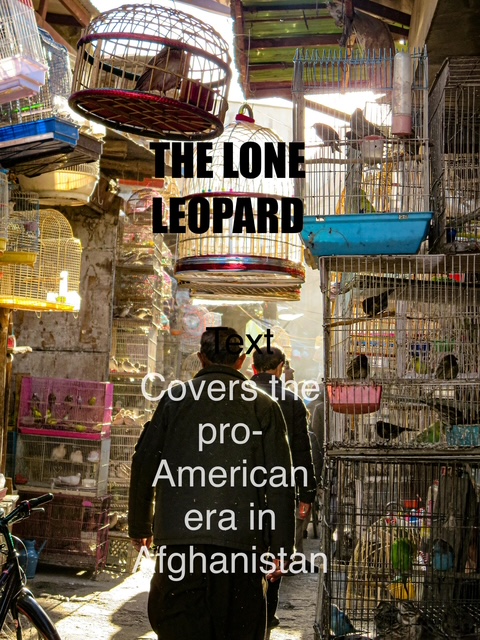
You saw too many beggars; too many multistorey shopping malls; too many dirt huts with small shops squeezed into them built on mountains, hills and empty pieces of land; too many beauty parlours; too many tents; too many luxury blocks of flats; too many carts; too many vehicles; too many beeps; too much heat; too much dust; too much population; and consequently, too much pollution.
Everywhere you looked you saw a maze of concretebarriers surrounding government or mafia buildings, with armed men also guarding in front of them. With all its percussive sounds of ghichak, tambur and rubab, the garden city of the 1960s had turned into a maze of concrete walls, which resembled the Pul-e-Charkhi Prison. Nine times through our journey today the ta-ta-ta-ta-ta-ta of helicopters filled the sky of Kabul. I counted 22 Mi-17 Russian helicopters in front of gigantic military hangars at the airport yesterday, with the American soldiers either loading or unloading. With all its liveliness and the pleasant smell of shiryakh ice cream and sikh kebab, Kabul looked like a battleground.
But Kabul hadn’t changed. My birthplace remained a qurbani, sacrificial, lamb where the Taliban daily slaughtered its sons and daughters, the punters turned them into betting objects, and the government neglected them. It awaited another Taliban takeover. The insurgents hung on for the withdrawal of American forces. Kabulis hoped their security forces, what Shujah called ‘lions’, some of whom kept me on their radar, would save them.
Yesterday’s horrible fedayi attack, as well as today’s bullet firing and assault by the broad-shouldered man, had shaken me, no matter how much I tried not to think about them. My heart had dropped to my stomach. My mind was disturbed. Kabul did feel like a valley of wolves; several of them had already snarled at me. What if they attacked the next time? Mour wouldn’t be able to take it. The sooner we found the wife and left, the better.