
Chapter Twenty-Four
For weeks, my only companions were insomnia, nightmares and regrets. I mulled over my response in the past few days leading to our departure from Kabul and wondered if I could’ve done anything to stop Frishta’s death from happening. If only I told her I loved her. She would’ve been with us. Or I would’ve died together with her. If only Khudai accepted my prayers in the Makroryan Mosque. Frishta wasn’t going to be part of tomorrow, or the day after, or forever thereafter. Frishta was dead; the civil war in Kabul took her away from me. Never let her wear the white wedding dress. Farhad Darya reminded me of this every single hour of every day when he sang, Frishta was a memory; Frishta was a dream; Frishta was a fond remembrance; Frishta was gone and gone.
To Agha’s disappointment, the situation in Kabul worsened. Turning Shia against Sunni and vice versa, setting Afghanistan’s main ethnic groups of Pashtun, Tajik, Hazara and Uzbek against each other, and accusing each other of uniting with the remnants of pro-Communist members and thus not being Islamic enough, the 15 or so mujahideen groups fought each other, killing tens of thousands of innocent Kabulis, displacing hundreds of thousands, and turning half of Kabul into mudbrick rubble with bombs, rockets and cannon fire. The conflicting interests of Pakistan and India, Iran and Saudi Arabia, not to mention Russia and America, as Agha said and Baktash had predicted, were fought on the streets of Kabul. To my disgust, I, too, had played a part in that conflict.
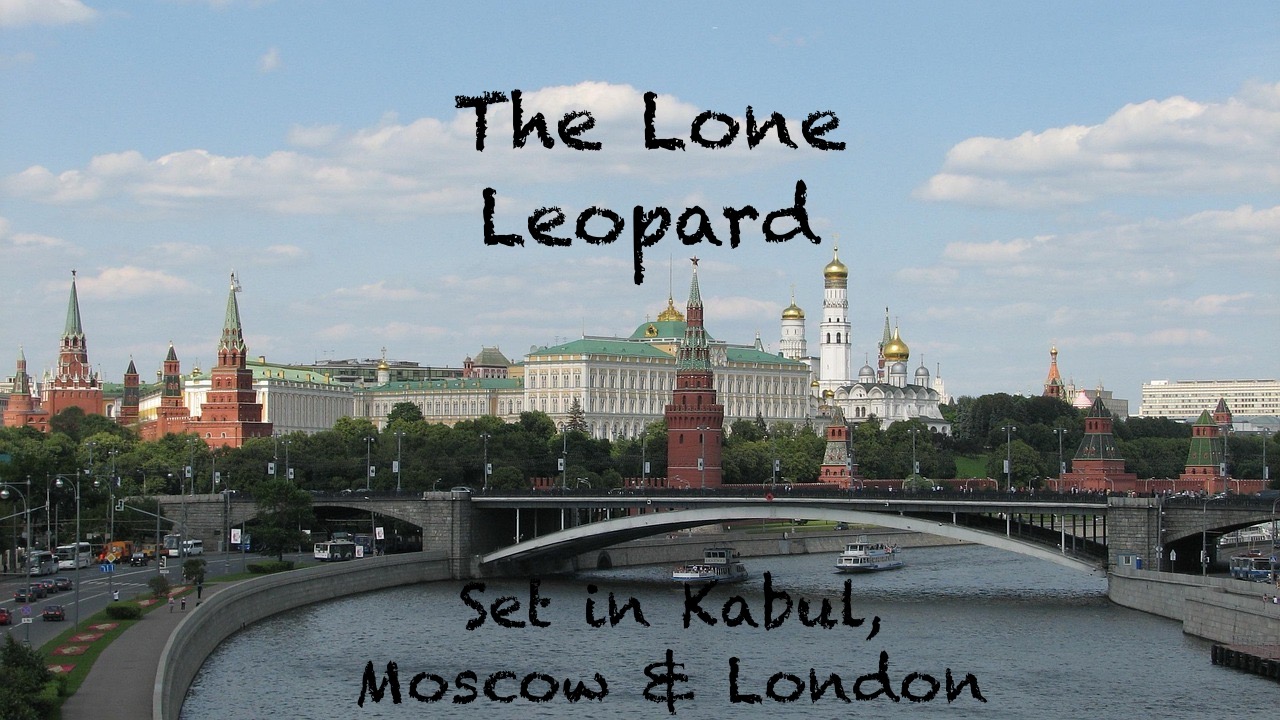
After my psychiatrist gave me the OK following months of support and advice, and after Agha was certain that peace and security were not in sight, and Mour discovered that entire neighbourhoods in Kabul had been looted and their doors and windows sold on the open market, her apartment included, we left for Moscow where his other friends ran import-export businesses. I learned in Moscow that once you lost power in Afghanistan, you lost dignity. Agha’s rich friends hid, as you did from a pandemic, in case Agha asked for favours. Agha never showed his face to them. ‘My honour is not for sale,’ he said.
Life was such we both travelled to the same workplace, the Soviet-era Sevastopol Hotel now transformed into a business centre; Agha worked part-time as a porter and spoke full-time about current Afghan affairs. I sold milk and home-cooked palaw rice, which Mour prepared.
The hotel accommodated hundreds of Afghan firms that imported and sold various goods from China and Turkey. You also found Afghan food, from palaw to ashak; Afghan baked products, from baklava to cream rolls; Afghan poetry books, music, movies with celebrities, from actors to singers; and plenty of posters for Afghan concerts. We’d emigrated from the Little Moscow of Kabul to Moscow’s Little Afghanistan.
Agha likewise found what he cherished: politics. Like Afghanistan, the place witnessed debates among the different camps: Islamists, pro-Communists, Liberal Traditionalists. These camps further subdivided themselves into the pro-Taliban Islamists versus the pro-Mujahideen ones. The Khalqi comrades versus the Parchami comrades. Both versus the Maoists. The parliamentary system defenders who favoured King Zahir Shah versus the presidential system who favoured Daoud Khan. Worse, these subgroups divided themselves into further categories who defended different mujahideen commanders. Even worse, Pashtun, Tajik, Hazara and Uzbek disagreed on what percentage of the population they constituted and how they had violated one another’s rights in past centuries. Plenty to debate on Afghanistan, and plenty of historical examples to invoke to blame each other for Afghanistan’s ills. These discussions often ended up in fights. Agha was frequently beaten up in those debates.
After about six months, Ali Hussain, a Hazara Shia Afghan businessman, told me, his ‘Afghan brother’, that I could do better than sell milk. He gave me shoes on credit from his firm in Sevastopol, and I sold them in the Cherkizovsky Market, as vast as Makroryan. His every kindness reminded me of what Wazir and I had done to Baktash, and put me to shame.
Over time, I bought a store. Like tens of thousands of other Afghans, Chinese and Central Asians I employed two Ukrainian women – but unlike most employers of the marketplace, my saleswomen were in their sixties. Soon I supplied shoes to two dozen small stalls, whose owners were Afghan men and a couple of women. They paid me once they sold the goods. I told Agha not to worry about my sisters’ school fees and apartment rent, and pleaded with him not to work; he daily got verbal abuse from Afghans for his part in the pro-Communist government. He gave up his job as a porter and his full-time job now constituted talking about politics – and drinking. He drank at least a bottle of vodka every day with his comrades in Sevastopol, and returned home in a state of perpetual intoxication. There was no time when Agha’s mouth didn’t smell of alcohol, but Mour’s respect hadn’t diminished one bit; my father was still a minister for Mour.
I disagreed with the notion that time healed. Life was never the same without Frishta. I never managed to fix my grief, but succeeded in coping with my feelings and focused on my caring responsibilities for my parents and sisters, as well as Baktash and Mr Barmak’s families who were now based in Pakistan, until one day in Moscow they called to plead for a large sum to apply for ‘a widow visa’ to America. After receiving the money, both families never spoke to me; my father’s relative, Shujah, told me he’d never seen them and their flats were ‘grabbed’ by warlords. I prayed they made it to their destination and forgot about them – not about Frishta. At times little things like Ahmad Zahir’s or Farhad Darya’s songs or Schwarzenegger’s movies overwhelmed me with grief. But then I’d hear Frishta’s voice, Don’t allow bullies to shatter your dreams. I’d perform ablutions, pray nafl-prayers, supererogatory prayers, read the Quran, pray for Frishta, and carry on concentrating on my responsibilities: something Frishta would have wanted me to do if she was around. Every time I faced a situation where another person or I was unfairly treated and my heart wanted to abandon me, Frishta’s voice whispered in my ear: Take refuge in Khuda jan. Once He protects you, no one will overcome you.
While Afghans in their debates in the Sevastopol Hotel blamed each other for their ills, I blamed Afghanistan and all those who lived in it and vowed to cease all my connections to my watan. Nothing was left to connect with, anyway, and the time had come to journey further away in search of what our watan had taken away from us: peace, security and dignity. Whereas some enjoyed the kebab-drink-and-women aspect of life, most Afghans saw Moscow as a platform to the West and toiled from 4am to 9pm to save up. I hated both the political debates and Moscow’s liberal life. As I made enough money for the human traffickers, Mour and I began to persuade Agha to leave for the West where Agha could get help for his alcohol addiction, and where I could restart education and my sisters further theirs; years of coaxing resulted in Mour agreeing to send her daughters to university. Once the Taliban hanged Najibullah and dashed Agha’s hopes of serving as an advisor or minister, Agha gave in. After working for three years and eight months in Moscow – three years and eight months of humiliation, indignation and random Moscow Police checks when you either had to pay a bribe or get a beating – we left for England. I was filled with trepidation on the day the human trafficker placed us on the train to Ukraine; I feared something bad was about to happen.